Most riders who blow up in a race in India assume they weren't fit enough. Usually they were. What went wrong was that they took in far less fuel than the effort demanded, and lost more sodium than they replaced, and the two compounded until the legs stopped answering.
Fuelling is the most improvable part of race performance for the average amateur, because most people are starting from a very low base. It's also the part nobody practises.
How much carbohydrate you actually need
Your body stores roughly 90 to 120 minutes of hard riding as muscle and liver glycogen. After that you're running on whatever you've eaten during the effort.
The working numbers:
- Under 90 minutes. You probably don't need to eat at all. Water and a good pre-race meal will cover it.
- 90 minutes to 2.5 hours. 30 to 60g of carbohydrate per hour.
- Beyond 2.5 hours. 60 to 90g per hour, and you'll need a mix of glucose and fructose to absorb the higher end.
That last point is the one worth understanding, because it explains why people who try to eat more just end up nauseous. Glucose absorbs through one intestinal transporter which saturates at around 60g per hour. Fructose uses a different one. Combine both and you can get closer to 90g an hour without the surplus sitting in your gut. Most modern sports gels are formulated to a roughly 2:1 glucose-to-fructose ratio for exactly this reason. Eating three bananas an hour will not achieve the same thing.
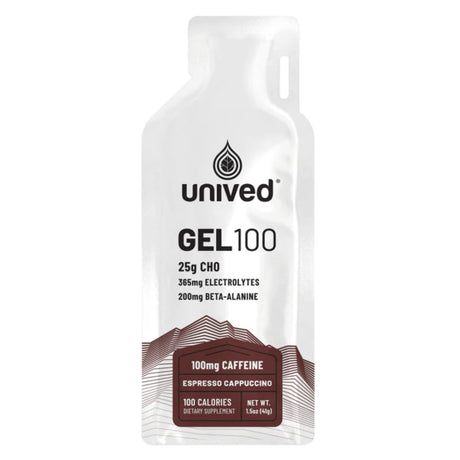
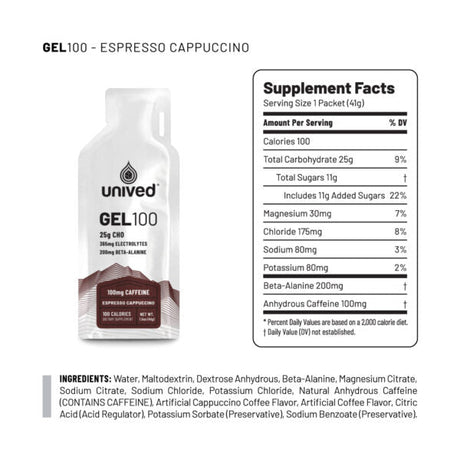
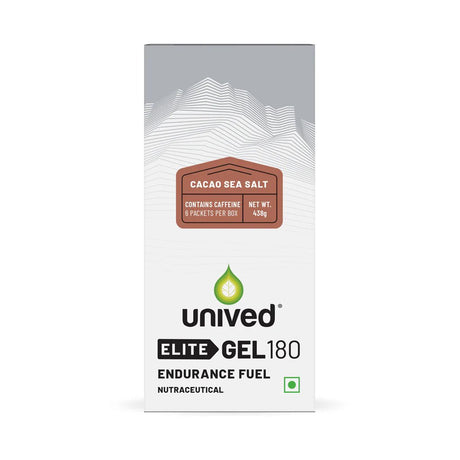
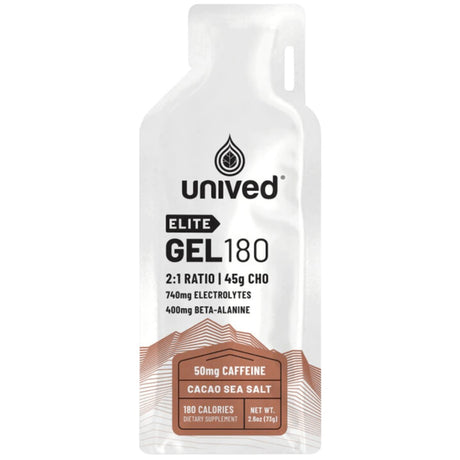
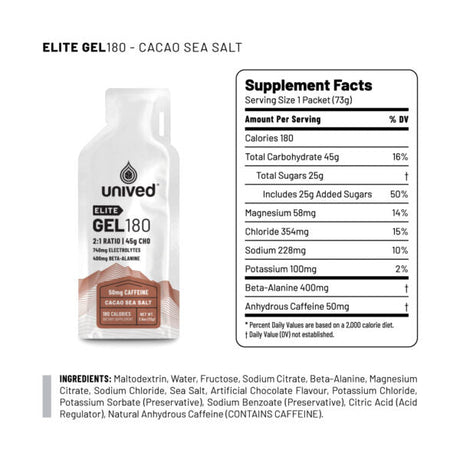
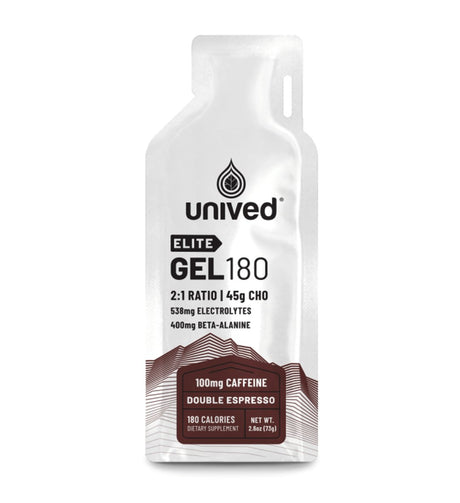
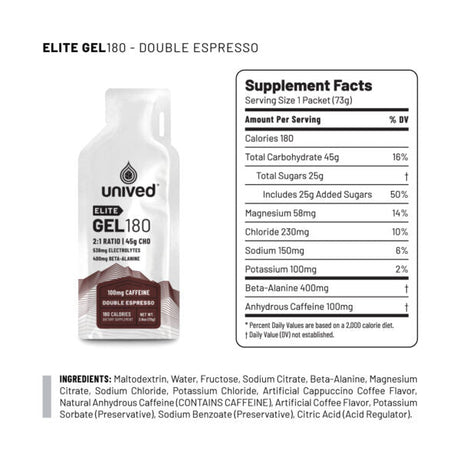
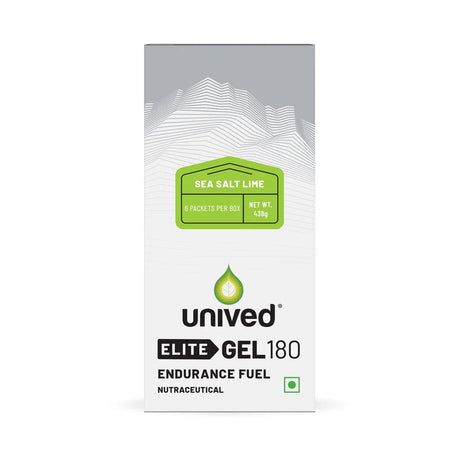
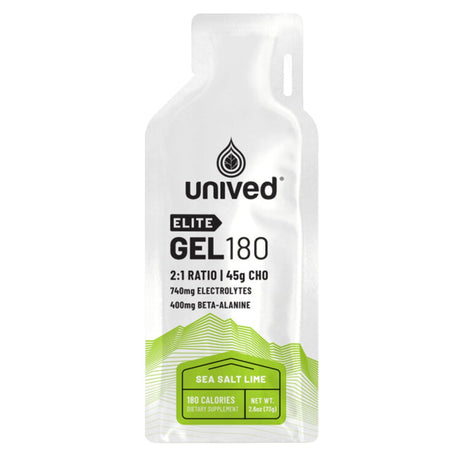
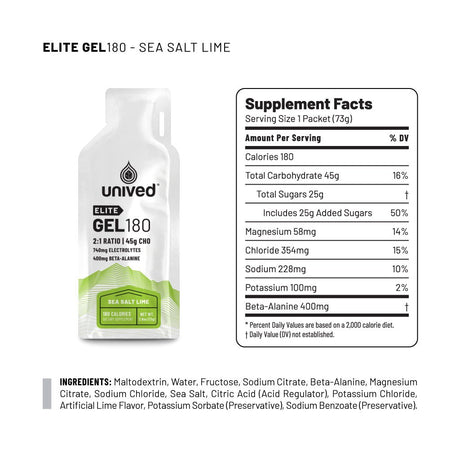
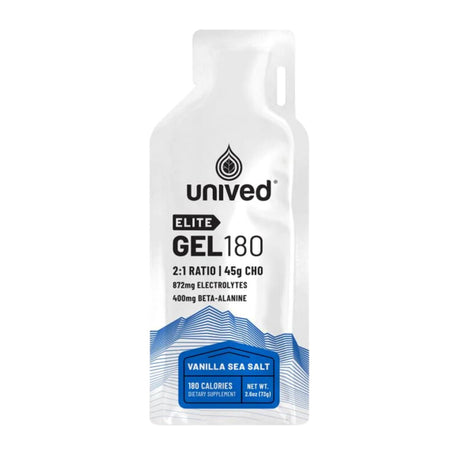
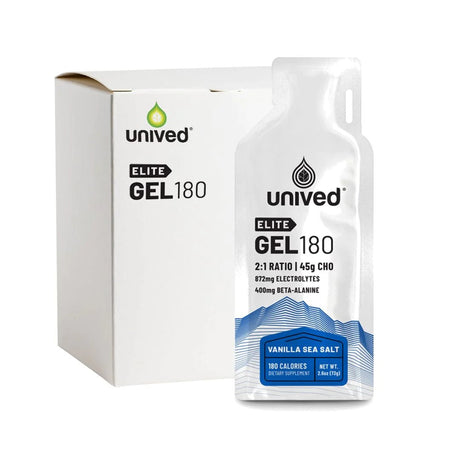
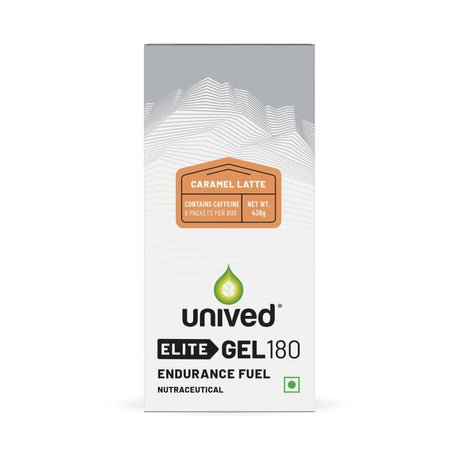
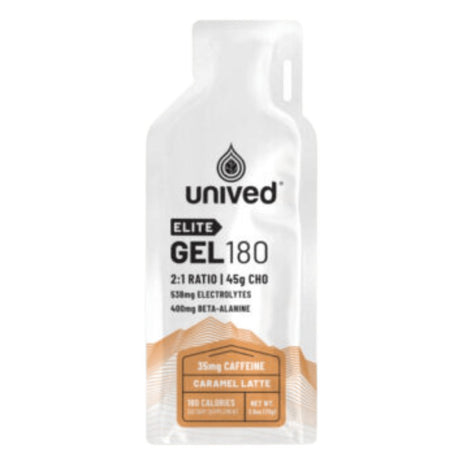
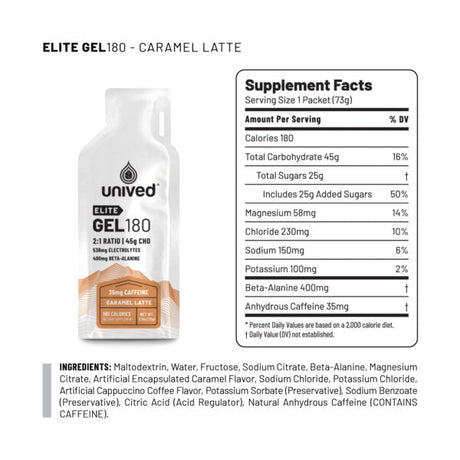
Convert that into something you can count. A Unived Elite Gel 180 carries 45g of carbohydrate per packet, so at a 60g/hr target you're taking roughly one every 45 minutes. The Elite Gel 360 is the larger format and suits riders pushing towards the 90g end on long events. Work out your hourly number before the race, divide by what's in a packet, and set a timer. Do not fuel by feel. By the time you feel hungry on a bike you are already behind.
Sodium, and why Indian conditions change the maths
This is where generic international advice stops being useful.
Sweat rates in Indian race conditions commonly run between 1 and 1.5 litres per hour, and higher in humid coastal events where evaporative cooling is poor. Sodium concentration in sweat varies enormously between individuals, roughly 300 to 1500mg per litre. So two riders side by side can have a fourfold difference in sodium loss over the same three hours.
You can get a rough read on your own status without lab testing. If you finish rides with white salt crusting on your skin, kit or helmet straps, you're a salty sweater and need to take this seriously. If your kit is clean at the end, you likely lose less.
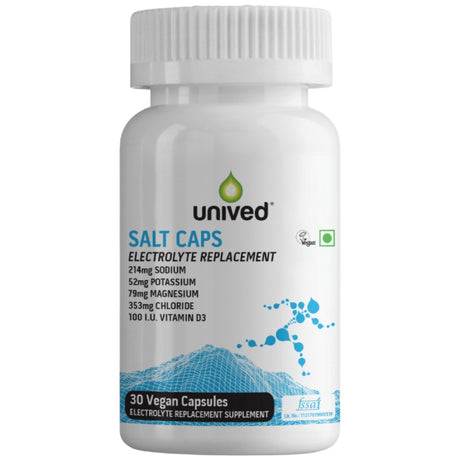
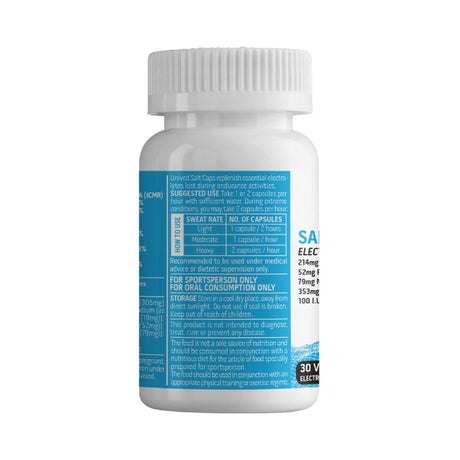
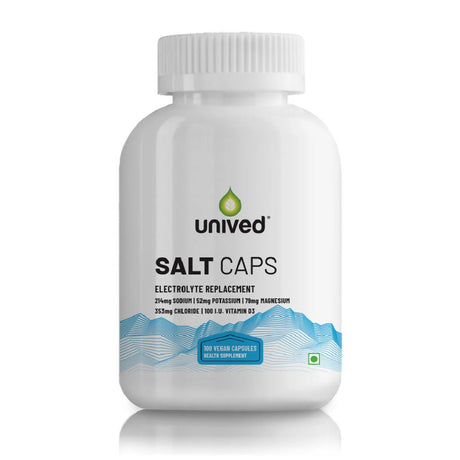
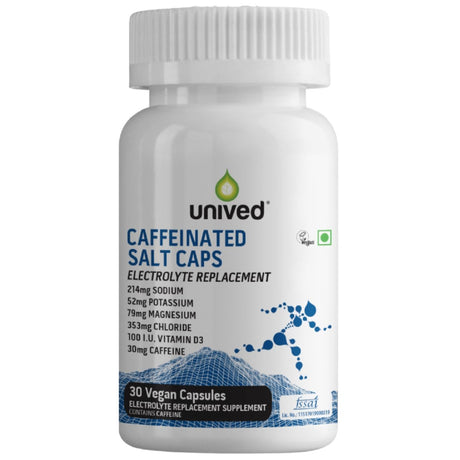
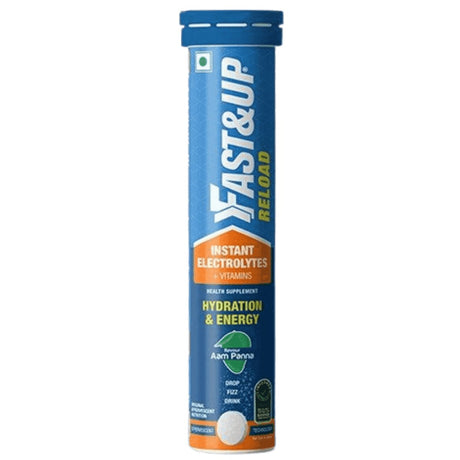
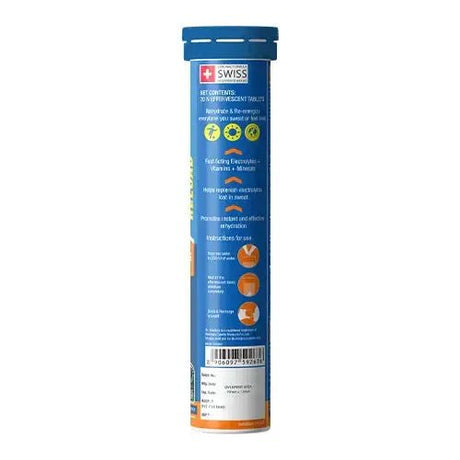
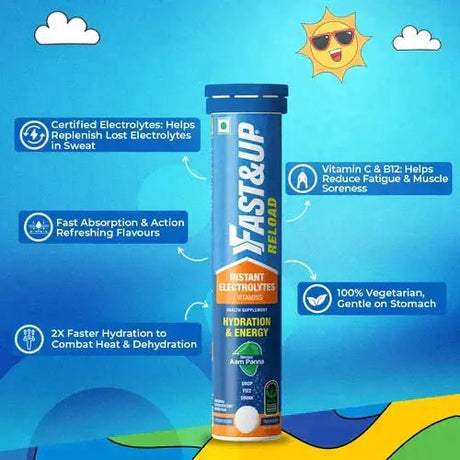
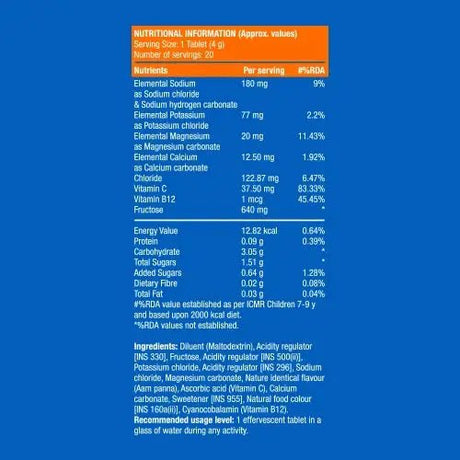
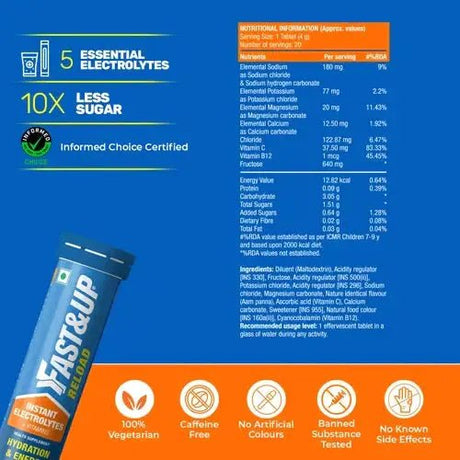
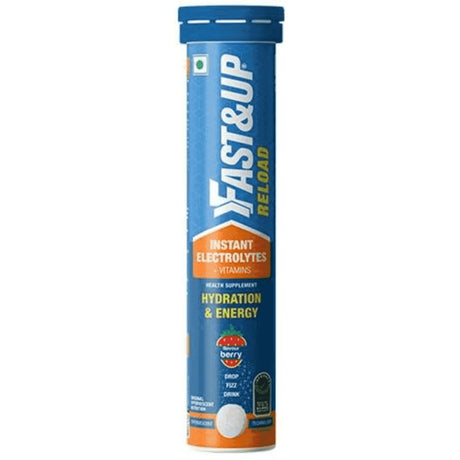
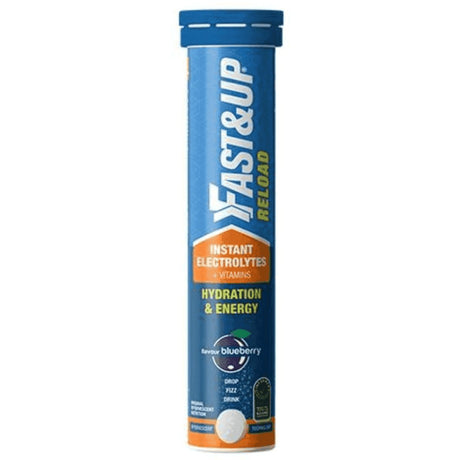
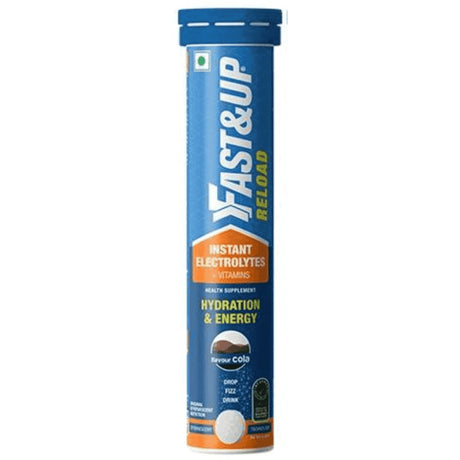
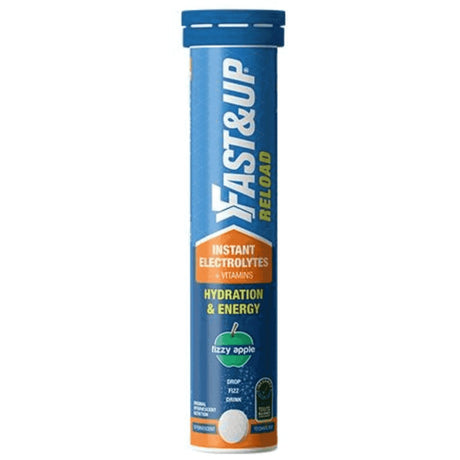
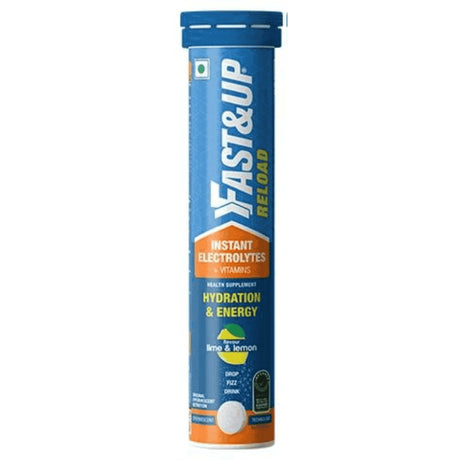
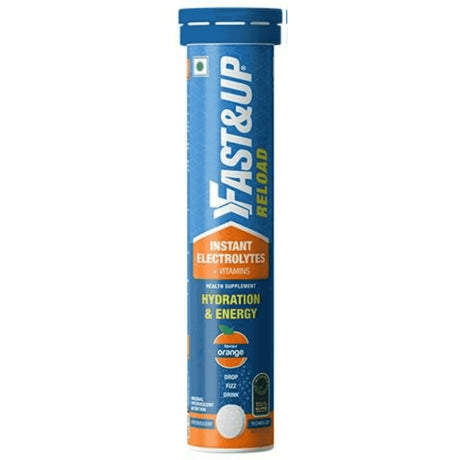
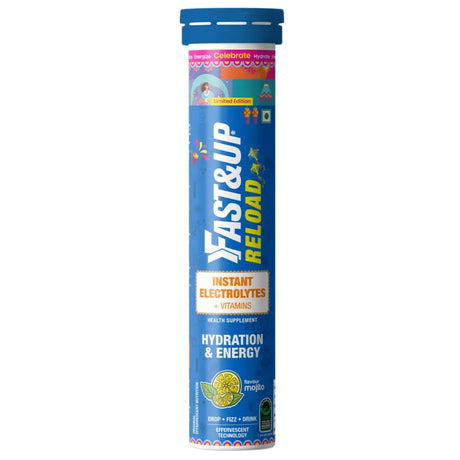
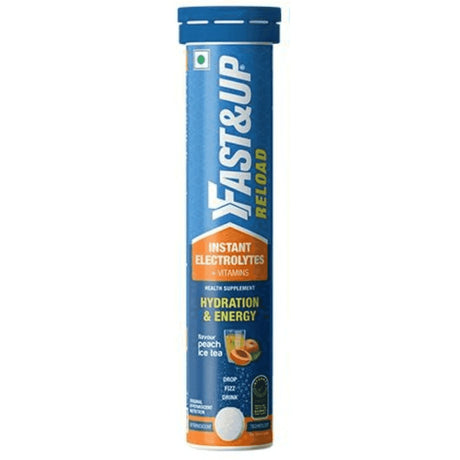
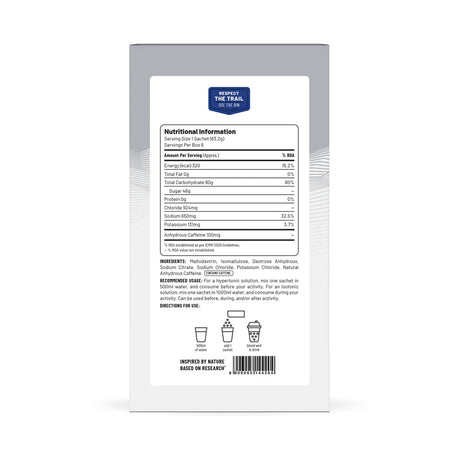
Practically: an electrolyte tablet in one bottle covers moderate conditions. Fast&Up Reload is the straightforward option here and dissolves cleanly. For longer or hotter events, or if you're a heavy salt loser, adding salt capsules lets you increase sodium without making every bottle taste stronger, which matters over four or five hours when palate fatigue sets in.
Cramping deserves a note. The old story that cramp is purely an electrolyte problem is not well supported. Current evidence points more towards neuromuscular fatigue, particularly riding at an intensity you haven't trained for. Sodium is still worth getting right for other reasons, but if you cramp consistently at the same point in every race, look at your pacing and your training load first.
Heat and humidity: what actually changes
Riding hard at 35°C is a different physiological problem from riding hard at 20°C, and the fuelling plan has to change with it. Four things happen, and only the first is obvious.
1. You lose more fluid, and more sodium with it
Covered above, and it is the part everyone knows. Sweat rate climbs, and sodium goes out with it.
2. Your gut absorbs less
This is the one that catches people out. When you get hot, blood is diverted to the skin to shed heat. That blood comes partly from the gut, which means the same gel you absorb comfortably in cool weather sits heavier when you are hot.
The practical response is not to eat less. It is to take the same carbohydrate with more fluid. A more dilute mix empties from the stomach faster than a concentrated one. If you normally run a strong drink mix, weaken it in the heat and make up the carbohydrate with gels taken alongside plain water.
If you feel food sloshing in your stomach, that is not a sign to push through. It means gastric emptying has stalled, and continuing to pour concentrated carbohydrate in will make it worse. Back the intensity off for a few minutes, take small sips of plain water, and let it clear.
3. Humid heat is harder than dry heat
These are not the same problem and they need different responses.
| Dry heat | Humid heat | |
|---|---|---|
| Where | Inland Deccan, Rajasthan, much of the north in summer | Coastal: Mumbai, Chennai, Goa, Kolkata, Kochi |
| What happens | Sweat evaporates fast, so cooling works well | Sweat cannot evaporate, so it runs off without cooling you |
| The risk | You lose fluid without noticing, because you never feel wet | You sweat far more for far less cooling benefit |
| What to do | Drink to a schedule, not to thirst. You will underestimate losses. | Slow down. Your body cannot shed heat, so pace is the only lever. |
The mistake in humid conditions is holding your usual power and assuming hydration will cover it. It will not. When evaporative cooling fails, core temperature climbs regardless of how much you drink, and the only real control you have is intensity.
4. Cold drinks genuinely help
Drink temperature is not a comfort preference. Taking in cold fluid lowers your core temperature directly, and riders consistently perform better in heat with cold drinks than with warm ones.
Practically: freeze one bottle solid the night before and start with it alongside a normal one. It thaws over the first hour or two and you get cold fluid exactly when you are starting to overheat. An insulated bottle is worth having for events in serious heat.
Acclimatisation is worth more than any product
If you have an event in heat, train in heat. Roughly 10 to 14 days of regular exposure produces real adaptation: you start sweating sooner and more efficiently, plasma volume increases, and you hold a lower core temperature at the same effort.
This is the single largest gain available in hot-weather performance and it costs nothing. A rider who has done a fortnight of afternoon rides before a hot event will outperform an identically fit rider who trained only at dawn.
Know when to stop
Heat illness escalates quickly and finishing is not worth it. Stop, get into shade and get cool if you experience any of the following: you stop sweating despite the heat, you get chills or goosebumps, you feel confused or your vision goes strange, your skin goes red and dry, or you have a headache with nausea that is getting worse rather than better.
Confusion in particular is a warning sign the rider is usually the last person to notice. If you ride in heat regularly, ride with someone.
Caffeine
Caffeine is one of the few legal aids with genuinely solid evidence behind it. The effective range is roughly 3mg per kilogram of bodyweight, taken 30 to 60 minutes before you need it, so around 200mg for a 65kg rider.
Two things people get wrong. First, more is not better. Past about 6mg/kg you get the jitters and elevated heart rate without additional benefit. Second, timing beats quantity. On a long event, holding your caffeine for the back half when fatigue is real does more than taking it all at the start.
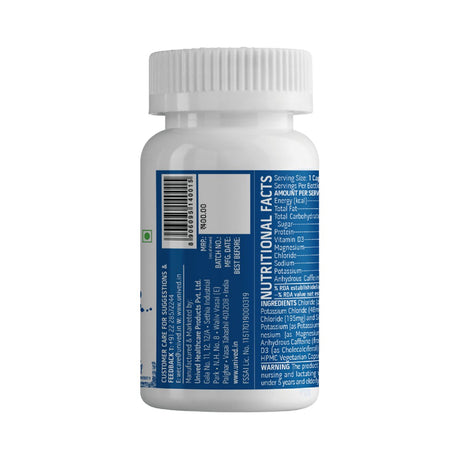
Caffeinated salt capsules are a neat way to handle both sodium and caffeine in the second half of a long ride without carrying separate products.
If you drink coffee daily, consider cutting back for a few days before a target event. The response is blunted by habituation, and a short washout restores some of it.
Hydration, without overdoing it
Aim to replace most but not all of what you lose. Around 500 to 750ml per hour suits most riders in Indian heat, adjusted for how much you're actually sweating.
Drinking to excess is a real risk in hot events, and a more dangerous one than mild dehydration. Taking in large volumes of plain water while losing sodium through sweat dilutes blood sodium, and the early symptoms of headache, nausea and confusion look enough like dehydration that people respond by drinking even more. This is why electrolyte in the bottle matters rather than being optional garnish.
Two bottles is the practical minimum for anything over two hours. If your frame only takes one, a saddle-mounted carrier adds capacity without changing your position on the bike.
The pre-race meal
Eat three to four hours before the start. Carbohydrate-focused, low fibre, low fat, and nothing you haven't eaten before a hard ride previously.
For most Indian riders, idli with a light sambar, poha, upma, or plain toast with jam all work. What doesn't work is a heavy paratha, anything deeply fried, or a large portion of dal and rajma. Fibre and fat both slow gastric emptying and leave food sitting in your stomach when blood flow diverts to your legs.
Then take on 20 to 30g of carbohydrate in the last 30 minutes before the start, and start drinking early. Arriving at the line already slightly dehydrated is common at Indian summer events where riders are standing around in the sun before the flag drops.
Test everything in training
This is the part that separates riders who fuel well from riders who read about fuelling.
Your gut adapts to carbohydrate intake the same way your legs adapt to training load. A rider who normally takes 30g an hour and tries 90g on race day will very likely have gastrointestinal problems. Build it up across several weeks of long rides, increasing gradually, and by the time you race the volume feels normal.
Use your long rides as full dress rehearsals. Same gels, same electrolyte, same timing, same bottles. Find out then that a particular flavour becomes unbearable at hour three, not on the day it counts.
And practise the mechanics. Opening a gel packet with sweaty hands in a fast group is harder than it sounds, and dropping it means going without.
A worked example
A 65kg rider, four-hour road race, 34°C.
Three hours before: poha and a banana, plus 500ml water.
Thirty minutes before: one gel, sipping water. One bottle frozen solid overnight, one filled normally.
Hour one: the normal bottle with electrolyte. One gel at the 45-minute mark.
Hour two: switch to the frozen bottle as it thaws. One gel, one salt capsule.
Hour three: refill, one caffeinated capsule, one gel.
Hour four: one gel at the start of the hour, then ride it in.
That comes to roughly 60g of carbohydrate an hour, around 600ml of fluid an hour, sodium topped up through the second half, cold fluid arriving when core temperature is climbing, and caffeine timed for when it matters. It's not complicated. It just has to be planned rather than improvised, and rehearsed rather than attempted for the first time on race morning.
If you're building towards a specific event and want a fuelling plan sized to your weight and the course, come and talk to us at the shop in Kondapur, or ask TBA Guide about your event distance and conditions.
For long-distance events specifically, our brevet preparation guide covers pacing and equipment alongside nutrition.
FAQ
How many carbs per hour do I need on a long ride?
Under 90 minutes you likely need none. Between 90 minutes and 2.5 hours, 30 to 60g per hour. Beyond 2.5 hours, 60 to 90g per hour, using a mix of glucose and fructose so your gut can absorb the higher end.
Why do I feel sick when I try to eat more on the bike?
Glucose absorbs through one intestinal transporter that saturates around 60g per hour. Exceeding that with glucose alone leaves the surplus in your gut. Products using a glucose and fructose blend use a second transporter and allow higher intake. Heat makes this worse, because blood diverted to the skin for cooling reduces gut absorption.
How does heat change my fuelling plan?
Four things change. Fluid and sodium losses rise, gut absorption falls, humid heat limits your ability to cool at all, and cold drinks become genuinely useful. Take the same carbohydrate with more fluid, weaken concentrated mixes, and in humid conditions reduce intensity rather than trying to drink your way through it.
Is humid heat worse than dry heat for cycling?
Yes, physiologically. In dry heat sweat evaporates and cools you, so the risk is losing fluid without noticing. In humid heat sweat runs off without evaporating, so you lose fluid and get very little cooling in return. In humidity, pace is the main lever you have, not hydration.
Do cold drinks actually help in the heat?
Yes. Cold fluid lowers core temperature directly and riders perform measurably better in heat with cold drinks than warm ones. Freezing one bottle solid the night before gives you cold fluid an hour or two in, which is usually when you need it.
How much should I drink per hour when cycling in India?
Around 500 to 750ml per hour suits most riders, adjusted to your sweat rate. Do not drink to excess. Taking large volumes of plain water while losing sodium can dilute blood sodium, and the early symptoms resemble dehydration, which leads people to drink more and worsen it.
Do I need salt capsules or are electrolyte tablets enough?
An electrolyte tablet in one bottle covers moderate conditions. For longer or hotter events, or if you finish rides with white salt crusting on your skin and kit, salt capsules let you add sodium without making every bottle taste stronger.
What should I eat before a race?
Three to four hours before, something carbohydrate-focused, low in fibre and fat, and familiar. Idli with light sambar, poha, upma or toast with jam all work. Avoid heavy parathas, fried food and large portions of dal or rajma, since fibre and fat slow gastric emptying.
When should I stop riding in the heat?
Stop and get into shade if you stop sweating despite the heat, get chills or goosebumps, feel confused or your vision changes, your skin goes red and dry, or you have a worsening headache with nausea. Confusion is the sign the rider notices last, which is a good reason to ride with someone in serious heat.