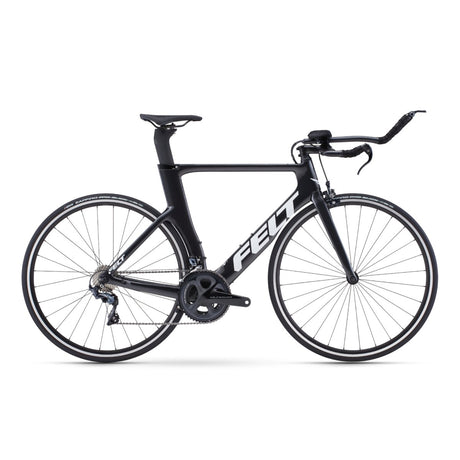
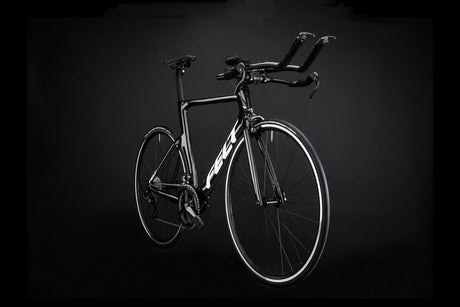
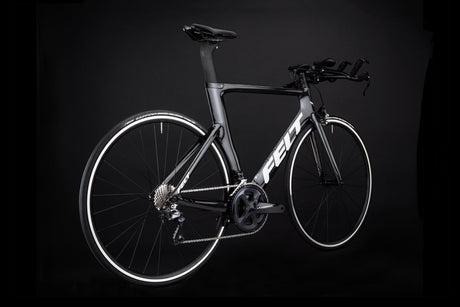
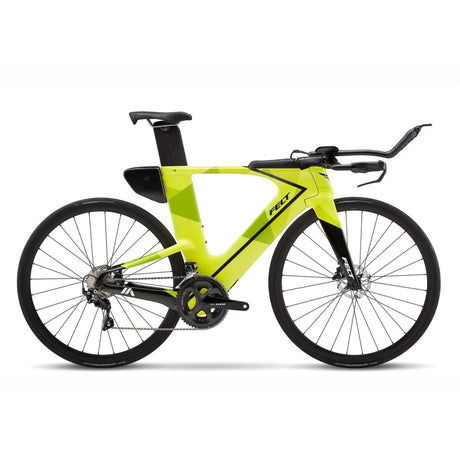
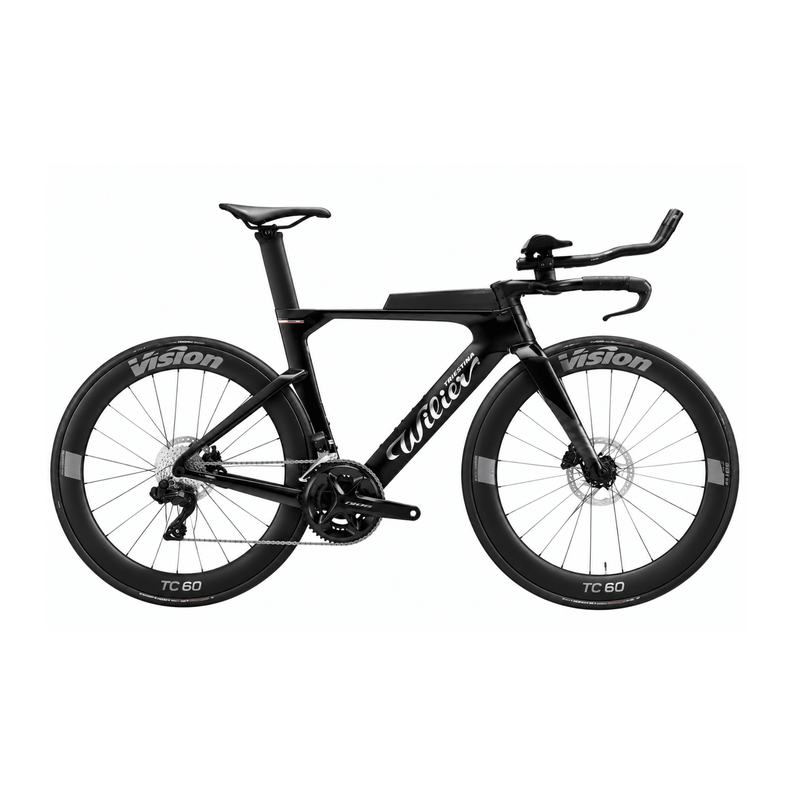
Short answer: a triathlon bike makes sense once you race non-drafting triathlons regularly and train for hours in the aero position. Before that, clip-on aero bars on your road bike, from ₹12,999, deliver much of the benefit for a fraction of the cost. Time trial bikes are built to UCI rules for road racing; triathlon bikes ignore those rules for a more forward position, storage and hydration. Our triathlon bikes run from ₹2,79,990 for the Felt B Performance Ultegra to ₹9,25,999 for the Cervelo P5, and your fit decides more than the frame.
"TT bike" is one of the most searched cycling terms in India, usually typed by someone who has just entered a first 70.3 or watched a friend glide past on aero bars. A dedicated tri bike is a serious purchase that does one job very well and several others badly. This guide explains what separates a TT bike from a triathlon bike, when a road bike with clip-ons is the smarter buy, what a tri bike is bad at, and how our triathlon range compares.
- TT bike or triathlon bike: what is the difference?
- Do you need one yet?
- What a tri bike is bad at
- The road bike and clip-on route
- Fit matters more than the frame
- Our triathlon bikes compared
- Storage and hydration
- FAQ
- Choosing your tri bike
TT bike or triathlon bike: what is the difference?
The two look almost identical, and most bikes sold as one can be ridden as the other. The difference is the rulebook each is designed around.
- Time trial bikes are built to race under UCI rules, which govern time trials in professional road cycling. Those rules limit how far forward the saddle can sit relative to the bottom bracket, how far the extensions can reach, and what can be attached to the frame. Pro team TT bikes are designed inside those limits.
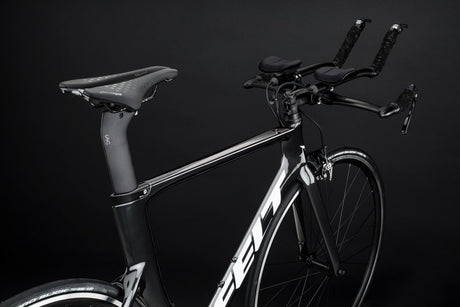
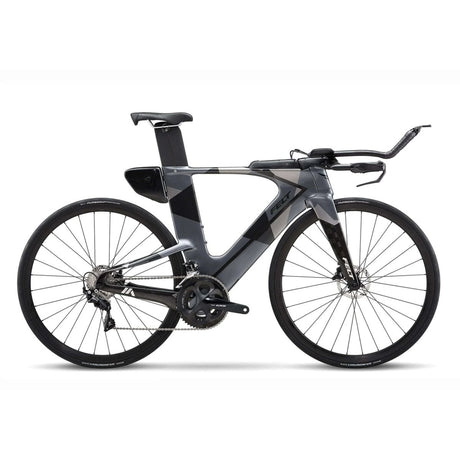
- Triathlon bikes are built for triathlon's own rules, which are far looser. That frees designers to steepen the seat angle so the rider sits further forward, to add integrated bottles, food boxes and tool storage, and to shape the front end for a position held for 90km or 180km rather than a 40-minute effort.
The forward seat position is the part that matters. Rolling the hips forward opens the angle between torso and thighs, so you can get low at the front without crushing your breathing or your hip flexors, and many triathletes find their legs feel fresher for the run. That is why a rider on a well-fitted tri bike can hold a position that a road bike with clip-ons cannot quite reach.
Do you need one yet?
Probably not for your first triathlon. Most riders get the bulk of the benefit by learning to ride low on the road bike they already own. A dedicated tri bike starts to make sense when most of these are true:
- You race non-drafting triathlons, such as 70.3 and full-distance events, and plan to keep racing them.
- You can already hold an aero position on clip-ons for an hour or more without neck, back or saddle trouble.
- You have a second bike for group rides and hilly routes, or you mostly train alone and indoors.
- You are willing to have the bike fitted properly, because a tri bike set up badly is slower and less comfortable than a road bike.
If you are still putting together kit for a first race, our guide to what to buy for your first half Ironman covers where the money matters most.
What a tri bike is bad at
- Group rides. In the aero position your hands are away from the brakes. Many groups ask riders not to use aero bars in a bunch, so on a club ride you spend the morning on the base bar, the least comfortable place on the bike.
- Climbs and slow corners. The steep seat angle and weight over the front make a tri bike less settled on steep climbs and in tight, slow turns.
- Tall gearing. Many tri bikes come with 52/36 chainrings, chosen for holding speed on flat courses rather than for climbing.
- Crosswinds. Deep wheels and a deep front end catch gusts. If you are new to deep-section wheels, get used to them in training, not on race day.
- Travel. The cockpit makes a tri bike awkward to pack, and it needs a bag built for its shape. Our guide to travelling with your bike covers cases and airlines.
- Maintenance. Hidden cables, integrated brakes and model-specific parts make some jobs slower and some spares harder to find.
The road bike and clip-on route
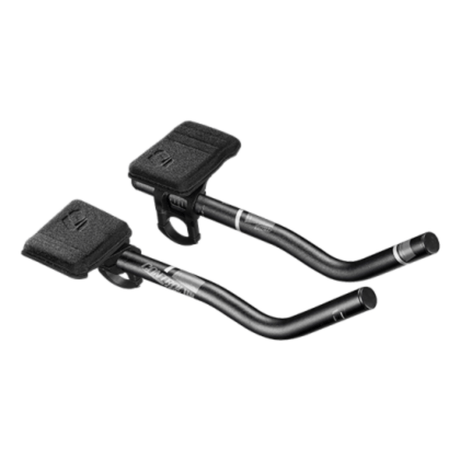
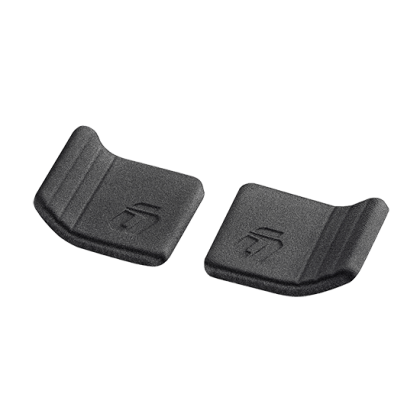
Clip-on aero bars clamp to the round section of a road handlebar beside the stem and give you elbow pads and extensions. For most riders they are the right first step: they cost a fraction of a tri bike, they come off for group rides, and they teach you whether you can hold the position at all.
| Option | Price | What it is |
|---|---|---|
| Deda Parabolica Due | ₹12,999 | Clip-on with S-bend extensions, adjustable armrests and a riser kit included. The simple starting point. |
| Deda Parabolica Pro | ₹25,299 | Clip-on with far more adjustment at the extensions and armrests, for riders building a long-course position. |
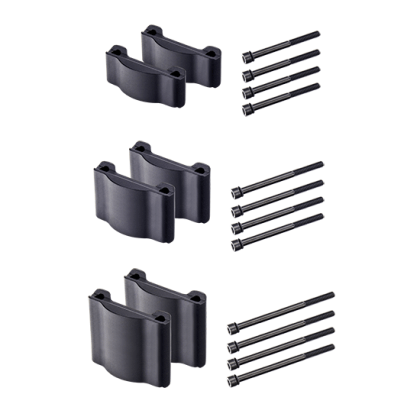
| Deda Extensions Spacers Kit | ₹7,399 | Six stack heights from 20mm to 120mm, to raise the extensions on the Parabolica Pro, Fast Pro and Jet 2 Evo. |
Three things to check before buying:
- Your handlebar. Clip-ons need a round clamping area. Many aero and integrated road bars do not have one, and some carbon bars are not approved for clip-ons at all. Check with the handlebar's maker.
- Your saddle position. On clip-ons you rotate forward, so riders often move the saddle forward and slightly up to stay comfortable. On some road bikes the saddle rails will not let it go far enough.
- Your handling. Practise on quiet roads first. Steering from the extensions is twitchier, and braking takes a moment longer because you have to move your hands.
Browse all aerobars and clip-ons.
Fit matters more than the frame
A tri bike's speed comes mostly from the rider's position, because the rider makes up most of the drag. An aggressive position you cannot hold is slower than a moderate one you hold for the whole bike leg, and a position that hurts your back costs you on the run.
Size charts give a starting point. Felt's triathlon chart, for example, puts its 48cm frame at 152cm to 168cm of rider height. On a tri bike, though, the numbers that matter are the height and reach of the elbow pads, the saddle height and position, and how far the cockpit adjusts. Two riders of the same height can need different frames, so if you are between sizes, a fit before purchase is the reliable way to choose. Shorter riders have fewer options, which our guide to bikes for shorter riders covers.
See the Felt triathlon bike size chart and our bike fit service.
Our triathlon bikes compared

| Bike | Groupset | Price | Worth knowing |
|---|---|---|---|
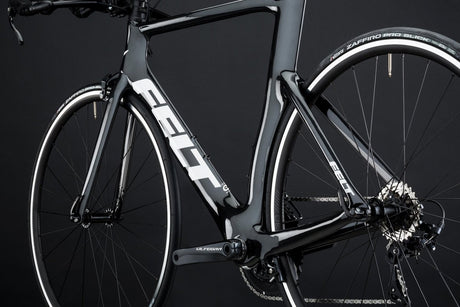
| Felt B Performance Ultegra | Shimano Ultegra | ₹2,79,990 | Felt's long-running carbon tri bike below the IA, and the most affordable way into the range. |
| Pardus Gomera Ultra 105 MVMT | Shimano 105 11-speed with MicroShift bar-end shifters, mechanical disc brakes | ₹2,99,990 | Front hydration, two bottle mounts, top tube and rear storage boxes, and 50/34 gearing that suits hilly courses. |
| Felt IA Advanced 105 | Shimano 105 | ₹4,69,990 | The IA platform, which Felt credits with six consecutive wins at the Kona world championship. |
| Wilier Turbine SL Vision TC 60 | Shimano 105 Di2 with Dura-Ace Di2 TT shifters and brakes | ₹4,99,990 | Hydraulic discs, integrated storage, room for 32mm tyres and Vision 60mm carbon wheels. |
| Wilier Turbine SL Reynolds AR 60 | Shimano 105 Di2 with Dura-Ace Di2 TT shifters and brakes | ₹5,49,990 | The same frame and build on Reynolds AR 60 carbon wheels. |
| Felt IAx Advanced Ultegra Di2 | Shimano Ultegra Di2 12-speed | ₹6,59,990 | The IA without its nose cone and one-piece front end, so the cockpit adjusts to more riders. |
| Cervelo P5 Ultegra Di2 (2025) | Shimano Ultegra Di2 12-speed, 52/36 with 11-30 | ₹9,25,999 | Comes with a power meter and Reserve 52|63 carbon wheels, so there is nothing left to upgrade for race day. |
Shifting matters more on a tri bike than on a road bike. Electronic groupsets put shift buttons on both the extensions and the base bar, so you can change gear without leaving the aero position or while climbing. Mechanical bar-end shifters, as on the Gomera, work well but sit only at the ends of the extensions.
A rough way to choose:
- Getting started on a budget: the Felt B Performance or the Pardus Gomera. The Gomera's mechanical shifting and brakes are easy to look after, and its built-in storage is the most complete at its price.
- Long-course racing with electronic shifting: the Wilier Turbine SL, which pairs Di2 at the extensions with hydraulic brakes and a cockpit designed for long-course comfort.
- A proven race platform: the Felt IA Advanced or IAx, depending on whether you want the more adjustable IAx front end.
- Nothing to add: the Cervelo P5, with power meter and deep wheels already fitted.
Browse the full triathlon bikes collection. Prices are indicative and move with exchange rates and import duty.
Storage and hydration
Long-course racing means eating and drinking on the bike, and tri bikes are built for it. A bottle between the extensions lets you drink without leaving the aero position, a top tube box holds gels and bars, and a case behind the saddle or inside the frame carries a tube, CO2 and levers. When you compare bikes, count how much the frame already carries, because every bottle cage and bag you add later costs drag and money.
How much to eat and drink, and when, is covered in why you bonk, and why it happens later than you notice.
FAQ
Are tri bikes allowed in every triathlon?
No: tri bikes and clip-on aero bars are allowed in non-drafting races, which include most age-group events and every Ironman and 70.3, but draft-legal races, where riders are allowed to ride in a bunch, usually require a road bike and restrict or ban aero extensions. Draft-legal age-group races are less common, but they exist, so read the race rules before you enter. If you are unsure which you will race, a road bike with removable clip-ons covers both.
How long does it take to get used to the aero position?
Most riders need several weeks of regular riding on the extensions before an aero position feels natural, starting with short blocks of five to ten minutes and building gradually towards holding it for most of a long ride or a full race distance. The neck, shoulders and saddle contact are usually the slowest to adapt. Do some of the work on an indoor trainer, where you can hold the position without traffic, and change the fit rather than forcing it if discomfort does not ease.
Should I buy deep wheels or a tri bike first?
For most riders, neither comes first: the order that saves the most time for the money is position, then an aero helmet and a well-fitted trisuit, then wheels, with the frame last, because the rider is most of the drag and a new frame changes only a small part of it. Clip-ons and a fit come before all of these. Deep wheels can also move to your next bike, which makes them the safer upgrade if a tri bike is a year or two away. Check your road bike's brakes and tyre clearance before choosing wheels.
How do I travel with a tri bike?
Use a bag designed for TT and triathlon bikes, because the extensions, base bar and integrated parts stick out at awkward angles that a standard road bike bag may not fit; the XXF N1808 at Rs 59,900, for example, takes a TT or road bike without removing the handlebar. Before packing, mark the positions of the extensions, pads and saddle with tape or photographs, so you can rebuild your exact fit at the race venue. Protect the rear derailleur, and carry the tools you need to reassemble the cockpit.
Can a shorter rider get a tri bike that fits?
Yes, though the choice narrows: Felt's smallest triathlon frames cover riders from about 152cm, the Wilier Turbine SL comes in an XS/S size and the Pardus Gomera starts at XS, while riders under about 160cm should pay close attention to stack and how low the extensions can go. At the small end, the frame's front-end height often decides fit more than its listed size. A fit before buying matters even more for shorter riders, because there is less room to correct a wrong frame with stems and spacers.
Choosing your tri bike
The right tri bike depends on your height, the races you are training for and how you ride now. Tell us those and ask TBA Guide which bike or clip-on setup suits you, and whether you should start with a fit.