Short answer: for most riders in India, buy disc brakes, and hydraulic ones if the budget allows. They stop consistently in the wet, need less hand effort in traffic, do not wear out your wheels, and are where every manufacturer is now putting its effort. Rim brakes still make sense in a few specific cases: a tight budget, a collection of good rim-brake wheels you already own, or a light climbing bike ridden only in dry weather. What does not make sense is paying extra for a rim-brake bike expecting it to be the better long-term buy.
This used to be a genuine debate. It mostly is not any more, but it is still the question many first-time buyers ask, often because a rim-brake bike is the one that fits their budget. This guide covers what actually differs between the two in Indian conditions, where each still makes sense, and the cable disc option in between.
- The market has already decided, mostly
- How each works
- Where disc brakes win
- Where rim brakes still make sense
- Cable disc: the middle option
- Parts, resale and the next few years
- Our verdict, by rider
- FAQ
- Narrowing it down
The market has already decided, mostly
Look across the road bikes we carry and the pattern is clear. From the mid-range upwards, almost every new bike uses disc brakes, and hydraulic disc brakes come as standard from Shimano 105 up. Rim brakes survive at the entry level, such as the Merida Scultura Rim 100 at ₹86,990, and in a few framesets for riders building a bike around parts they already own, such as the Basso Venta Rim frameset.
That matters for reasons beyond braking. It is where manufacturers now put their development, which is why new wheels, new frames and new groupsets arrive disc-first. Our groupset tiers reference shows where hydraulic brakes arrive in the range.
How each works
A rim brake squeezes pads against the braking surface of the wheel rim. It is simple, light and easy to adjust at the roadside, and it has stopped bikes well for over a century.
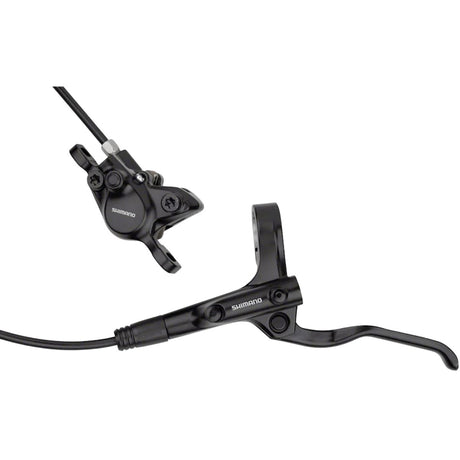
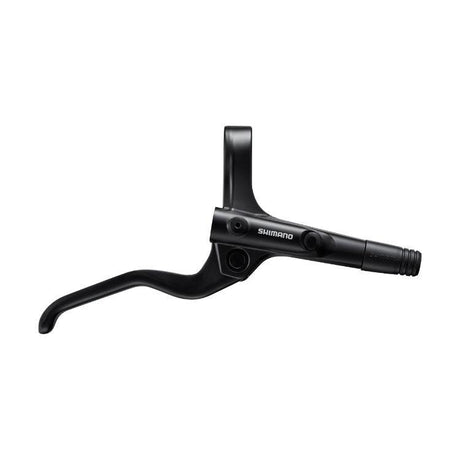
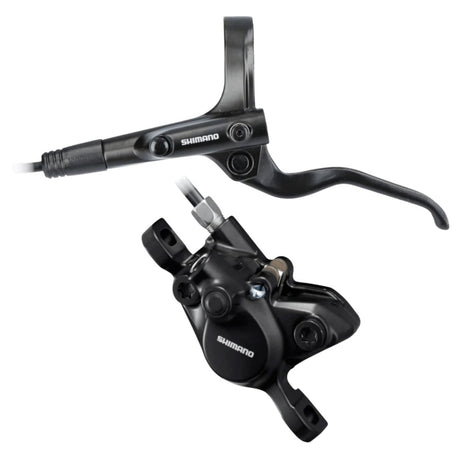
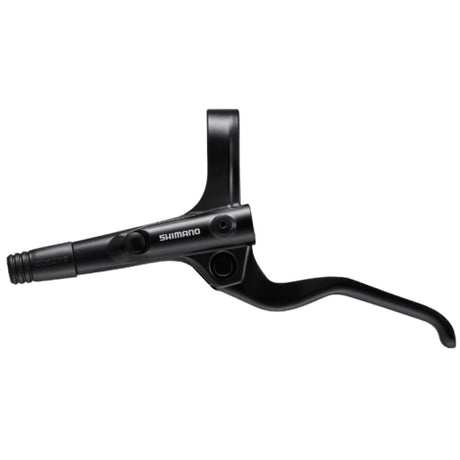
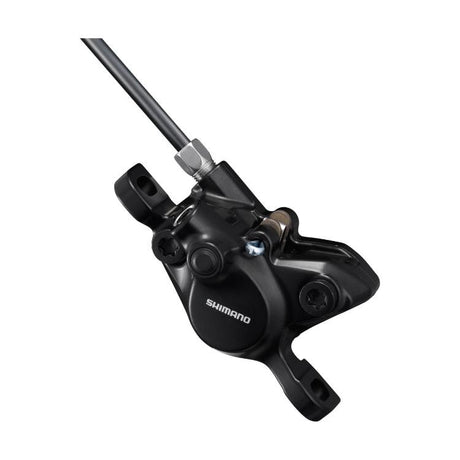
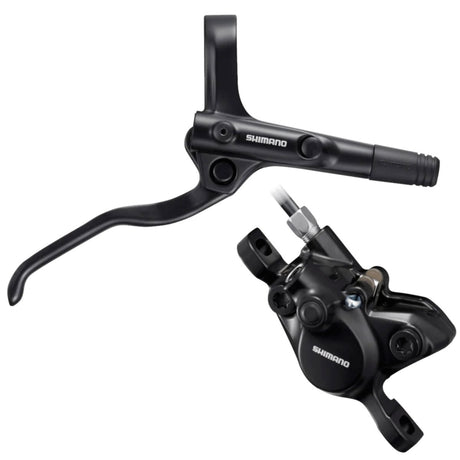
A disc brake squeezes pads against a separate metal rotor bolted to the hub. The braking happens away from the rim, which changes almost everything about how it behaves. It can be operated by a cable, called mechanical or cable disc, or by fluid in a sealed hose, called hydraulic disc.
Where disc brakes win

- In the wet. A rim brake has to wipe water and grit off the rim before it bites, so the first half-second of braking in the rain does very little. A disc rotor sits away from the spray and bites almost immediately. Through an Indian monsoon, in traffic, that difference is the whole argument.
- With less effort. Hydraulic disc brakes need a fraction of the hand force, and let you brake precisely rather than on or off. Over an hour of stop-start city riding with fingers covering the levers, you feel it.
- Your wheels last. A rim brake wears the rim itself, and monsoon grit caught in the pads grinds it away faster. Eventually the braking surface wears thin and the wheel has to be replaced. With disc brakes, the rotor wears instead, and a rotor costs a fraction of a wheel.
- On long descents. Braking on a rim heats the rim, and on a long ghat descent that heat builds up in the rim and the tyre. Carbon rims are particularly sensitive to it. Disc brakes keep that heat at the rotor.
- Room for wider tyres. Without rim-brake calipers around the tyre, disc frames generally take wider tyres, which suit Indian roads better.
Where rim brakes still make sense

Rim brakes are not unsafe, and in the dry a good rim brake stops very well. They still have real advantages:
- Lower cost. A rim-brake bike is usually cheaper than the equivalent disc bike, which can be the difference between a bike that fits the budget and one that does not.
- Lighter. Rim brakes and the wheels and frames around them weigh less, which matters most on a climbing bike.
- Simpler. No fluid to bleed, no rotors to bend, and adjustment with a single multitool at the roadside.
- Easy wheel swaps, with no rotor to line up in a caliper.
So a rim-brake bike is a sensible buy if the budget is tight and a disc bike is genuinely out of reach, if you already own good rim-brake wheels you want to keep using, or if you want a light climbing bike for dry-weather riding.
One thing to be clear about: a rim-brake frame cannot be converted to disc brakes later. There is nowhere to mount a caliper and the hubs cannot take a rotor. Our brake compatibility reference explains why.
Cable disc: the middle option
Many bikes at the lower end of the price range use cable-operated disc brakes. The Polygon Bend R2 is one example.
They give you most of the wet-weather advantage of disc brakes, and they spare your rims, at a lower cost than hydraulic. What they do not give you is the light lever feel and the fine control of hydraulic brakes, and the pads need adjusting as they wear.
On a flat-bar hybrid or mountain bike, cable disc brakes are easy and affordable to upgrade to hydraulic later, which our Shimano MT200 and MT201 guide covers. On a drop-bar bike it is much harder, because the hydraulic parts are built into the shift levers, so it is worth choosing hydraulic from the start on a road or gravel bike if you can.
Parts, resale and the next few years
Rim-brake bikes will be serviceable for many years, and parts will not disappear overnight. But the choice is narrowing. Fewer new rim-brake wheels are being made, fewer new frames, and fewer upgrades will be offered for them, so a rim-brake bike gets harder to improve over time.
Resale follows the same direction. A disc-brake bike is simply easier to sell on, because it is what most buyers are now looking for. If you tend to upgrade every few years, that is worth factoring into the price difference.
Our verdict, by rider
| If you | Buy |
|---|---|
| Ride through the monsoon, or in city traffic | Hydraulic disc |
| Ride long descents in the hills | Hydraulic disc |
| Are on a tight budget and ride mostly in the dry | Rim brakes, or cable disc if it fits the budget |
| Already own good rim-brake wheels | A rim-brake frame or bike |
| Want a light climbing bike for dry weather | Rim brakes can still suit you |
| Want to upgrade the bike over time | Disc, ideally hydraulic |
Prices are indicative and move with exchange rates and import duty.
FAQ
Are hydraulic disc brakes too powerful for a beginner?
No, and they are easier to control than they first seem: hydraulic brakes are more powerful, but their real strength is modulation, meaning you can apply just a little braking force precisely rather than grabbing. Squeeze progressively rather than snatching the lever, and practise a few firm stops in a quiet lane to learn how much the brake gives. Most new riders adapt within a ride or two and then find cable brakes feel vague.
Do disc brakes need more maintenance than rim brakes?
Different maintenance rather than more: disc brakes need their pads checked and replaced, occasional realignment if a rotor starts to rub, and on hydraulic systems a bleed now and then when the lever feels soft. Rim brakes need their pads checked, their cables adjusted as they stretch, and their rims inspected for wear. Hydraulic brakes actually need less routine adjustment, because they take up pad wear themselves. The main difference is that a hydraulic bleed is a workshop job rather than a roadside one.
Do rim brakes wear out my wheels?
Yes, gradually: every time you brake, the pads remove a tiny amount of the rim's braking surface, and in gritty or wet conditions the wear is much faster, because grit caught in the pads acts like sandpaper. Most rims have a wear indicator, often a small groove or dot, that disappears when the surface has worn too thin. Clean your rims and pads after wet rides, check for embedded grit, and replace pads before they wear down to the metal.
Are rim brakes safe on long descents with carbon wheels?
They can be, with care, but carbon rims and rim brakes need respecting on long descents: braking heats the rim, and carbon is more sensitive to heat than aluminium, so dragging the brakes all the way down a long ghat road can overheat the rim and the tyre. Brake firmly in short bursts before corners rather than dragging them continuously, and use pads designed for carbon rims, never aluminium-rim pads. This heat problem is one of the main reasons carbon wheels moved to disc brakes.
Why do my disc brakes rub?
Usually because the wheel is not seated perfectly or the caliper has shifted slightly, and both are quick to fix. First, loosen the axle, make sure the wheel sits fully in the dropouts, and retighten it. If it still rubs, loosen the caliper bolts, squeeze the brake lever to centre the caliper over the rotor, and tighten the bolts while holding the lever. If a rotor rubs at one point on each turn, it is slightly bent and can usually be straightened carefully.
Narrowing it down
Not sure whether the extra cost of disc brakes is worth it for how you ride? Ask TBA Guide with your budget and where you ride, and we will point you to the bikes that make sense on each side.