Short answer: most trained road riders settle between 85 and 95 rpm on the flat and 70 to 85 rpm on climbs, while newer riders often pedal at 60 to 75 rpm in too big a gear. There is no single perfect number, but a slightly higher cadence spreads the effort from your leg muscles to your heart and lungs, so your legs last longer on long rides. Raise it gradually, about 5 rpm at a time, with a cadence sensor that costs from ₹1,890.
Cadence is how many times your pedals go round each minute. It is one of the easiest parts of riding to measure and change, and one of the most argued about. This guide explains what cadence actually changes, the ranges that work for different kinds of riding, how to measure it, and the drills that make a higher cadence feel natural.
- What cadence changes
- Typical cadence by type of riding
- Signs your cadence is too low or too high
- How to measure cadence
- Drills to raise your cadence
- Gearing: making the right cadence possible
- FAQ
- Getting help with your training
What cadence changes
Power is the force you push on the pedals multiplied by how fast you turn them. At the same power, you can push hard at a low cadence or more lightly at a high one.
- Lower cadence, bigger gear: each pedal stroke takes more force. That loads your leg muscles and knees more heavily and uses up muscle fuel faster, which shows up late in a long ride as heavy, empty legs.
- Higher cadence, smaller gear: each stroke is lighter, so your muscles fatigue more slowly, but your heart rate and breathing rise a little because you move your legs more often.
That trade-off is why trained riders tend to pedal faster: their heart and lungs can handle the extra demand, and they save their legs for the hills and the finish. A newer rider's ideal cadence is usually a little higher than the one they choose naturally, but not as high as a professional's.
Typical cadence by type of riding
| Riding | Typical cadence | Why |
|---|---|---|
| Easy rides and Zone 2 | 80 to 90 rpm | Light gears keep the effort aerobic and easy on the legs. |
| Steady road riding on the flat | 85 to 95 rpm | Balances muscle fatigue with heart and lung effort. |
| Seated climbing | 70 to 85 rpm | Gearing and gradient limit cadence. Lower than this usually means you need easier gears. |
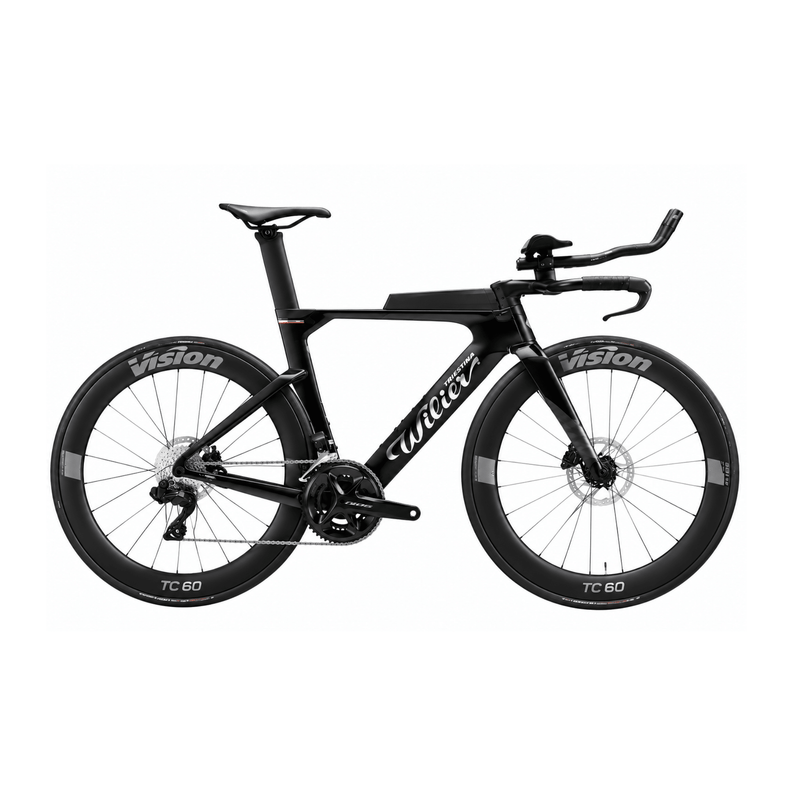
| Time trials and triathlon | 85 to 95 rpm | Steady, aero and saves the legs for the run. |
| Sprints | 100 to 120 rpm or more | Maximum power for a few seconds. |
| Low-cadence strength work | 50 to 60 rpm | Deliberate, short training efforts, not everyday riding. |
These are ranges, not targets. Riders differ, and your own best cadence depends on your fitness, leg length, crank length and the type of muscle fibre you have. Use them to spot whether you are far outside the usual range.
Signs your cadence is too low or too high
- Too low: you grind on climbs, feel pressure on the front of your knees, stand up early on every hill, and your legs are dead in the last hour of a long ride.
- Too high: you bounce on the saddle, your heart rate climbs while your legs feel fine, and your pedal stroke turns choppy. Bouncing can also mean the saddle is too high, which our saddle height guide covers.
How to measure cadence
You can count crank turns for 15 seconds and multiply by four, but a sensor shows it all the time and records it for later.
| Option | Price | Notes |
|---|---|---|
| iGPSport CAD70 | ₹1,890 | Cadence only, Bluetooth and ANT+. |
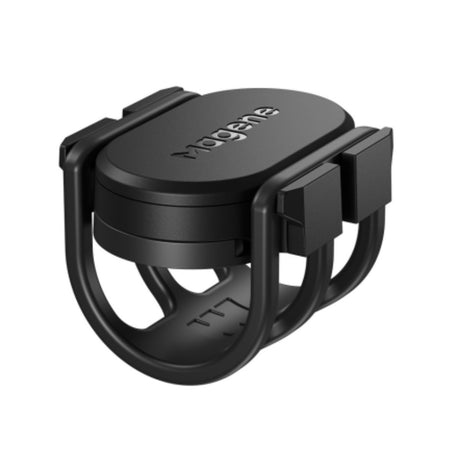
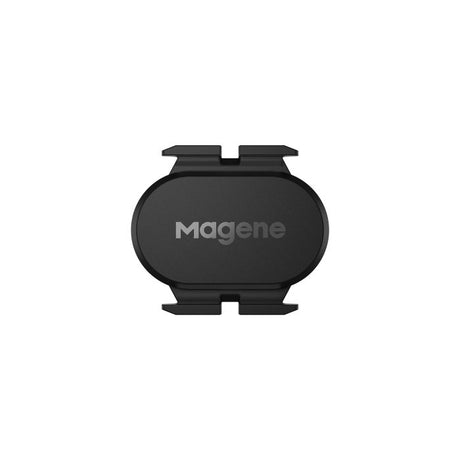
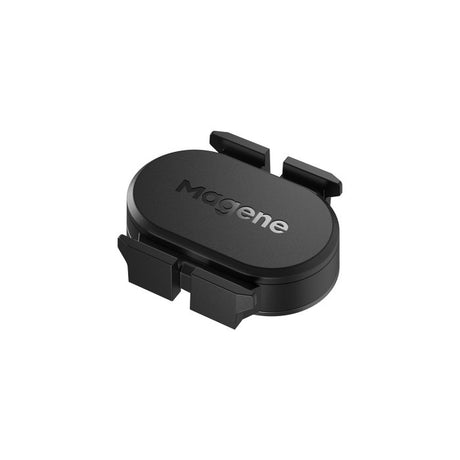
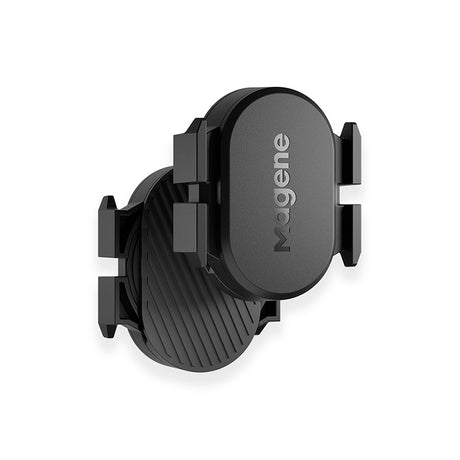
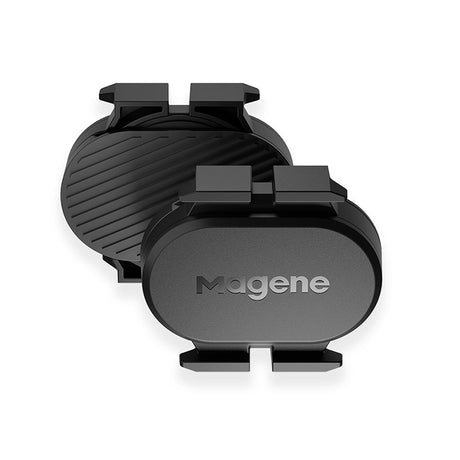
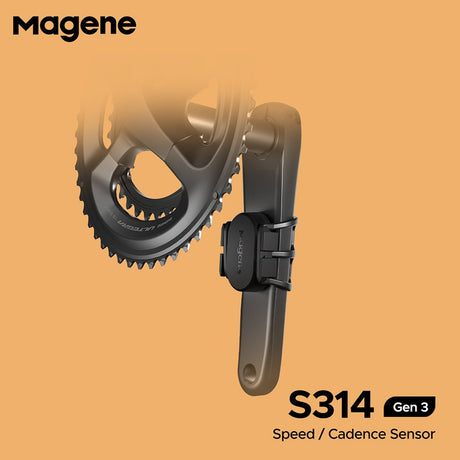
| Magene S314 | ₹2,590 | Switches between speed and cadence modes. |
| Garmin Speed and Cadence Sensor 2 Bundle | ₹7,990 | One sensor for each, for Garmin computer users. |
If you have a power meter or a smart trainer, you already have cadence: almost all of them send it to your computer or app. Our speed and cadence sensors guide covers setup and pairing. Prices are indicative and move with exchange rates and import duty.
Drills to raise your cadence
Do these once or twice a week, on a flat road or an indoor trainer, after a 10-minute warm-up. An indoor trainer is ideal, because there is no traffic and you can watch the number.
- Cadence ladder. Ride 2 minutes each at 85, 90, 95, 100 and 105 rpm in an easy gear, then come back down. Keep your hips still on the saddle. Stop the ladder where you start to bounce.
- Spin-ups. In a light gear, build your cadence over 30 seconds to the fastest you can hold without bouncing, hold it for 10 seconds, then ride easy for 2 minutes. Repeat 5 times.
- Single-leg pedalling (indoor only). Unclip one foot and rest it on the trainer frame, then pedal with the other leg for 30 seconds in a light gear. Swap legs, 4 times each. This shows up dead spots at the top and bottom of the stroke.
- Everyday target. On normal rides, aim 5 rpm above your usual average. Once that feels normal, usually after 3 to 4 weeks, add another 5.
Low-cadence strength intervals, such as 5 minutes seated at 50 to 60 rpm on a climb, also have a place in training, but keep them short and avoid them if your knees complain. If you train with power, set your zones first with our first FTP test guide.
Gearing: making the right cadence possible
Many riders cannot hold a sensible cadence on climbs simply because their easiest gear is too hard. If you drop below about 65 rpm on your regular hills even in the easiest gear, a compact chainset or a cassette with a bigger largest sprocket will help more than any drill. Our cassette and gear ratios guide explains what fits your bike.
FAQ
What is a good cadence for cycling?
A good cadence for most road riders is 85 to 95 rpm on flat roads and 70 to 85 rpm when climbing seated, because that range keeps the force on each pedal stroke moderate, spares the leg muscles on long rides and still feels smooth, while beginners often ride at 60 to 75 rpm in gears that are too big. Your best cadence is personal. Aim a little above what feels natural, without bouncing on the saddle.
Is a higher cadence better for your knees?
A moderately higher cadence is usually easier on the knees, because turning a lighter gear faster puts less force through the knee joint on every stroke than grinding a big gear slowly, which is why riders with knee pain are often told to shift down and spin, especially on climbs and when starting from a stop. Cadence will not fix a poor bike fit, though. Knee pain that persists is often a saddle height or cleat problem.
What cadence should you climb at?
Most riders climb best at 70 to 85 rpm when seated, which is lower than on the flat because the gradient and available gears slow the pedals, but dropping below about 65 rpm on a regular climb usually means the gearing is too hard and the legs and knees are working against too much force. Stand briefly to change muscles and position on steep sections. Fit easier gears if you grind on every hill.
Do I need a cadence sensor if I have a power meter or smart trainer?
No, almost every power meter and smart trainer measures cadence and sends it to your bike computer, watch or training app along with power, so a separate cadence sensor only adds value for outdoor rides on a bike without a power meter, or when you want speed indoors on a basic trainer. A cadence-only sensor costs from Rs 1,890. Check that your computer or app is set to use the power meter's cadence.
Why does my cadence drop at the end of long rides?
Cadence usually falls late in a long ride because tired leg muscles and low energy make fast pedalling feel harder, so riders shift into bigger gears and push, which tires the legs even more, and the fix is to keep eating and drinking from the first hour and to shift to an easier gear early rather than grinding. Building endurance with regular long rides helps too. A sudden drop in cadence is often the first sign you need food.
Getting help with your training
The right cadence depends on your fitness, your bike's gearing and the riding you do. Tell us those and ask TBA Guide what cadence to aim for and which sensor or gearing will help.