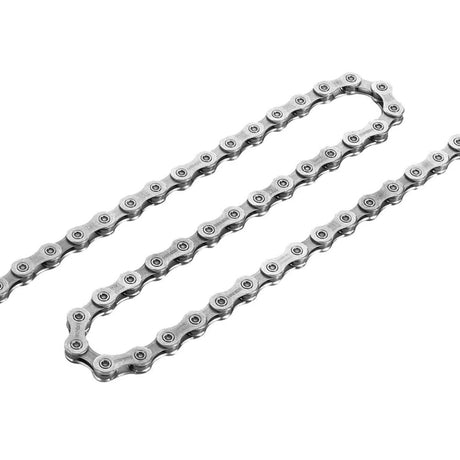
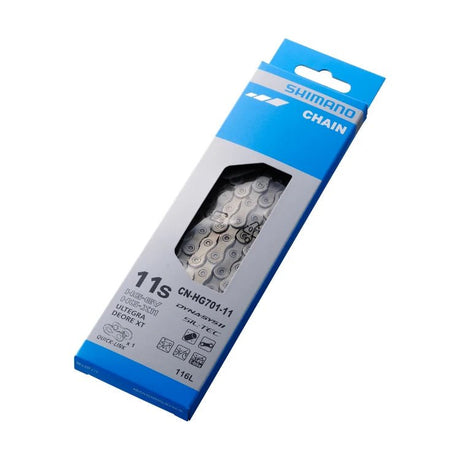
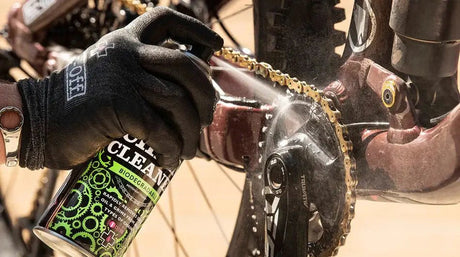
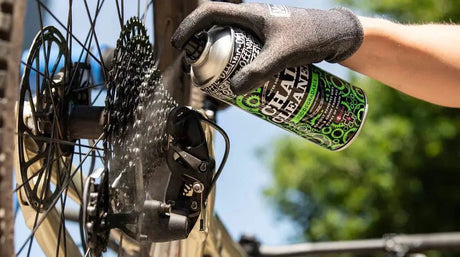
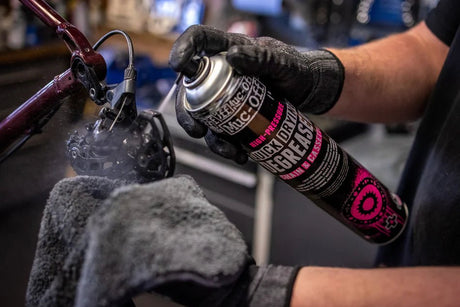
A chain costs a few thousand rupees. The cassette and chainrings it destroys when neglected cost several times that. Cleaning and lubricating a drivetrain takes ten minutes and is the highest return maintenance job on a bicycle, and in Indian conditions it needs doing considerably more often than the intervals quoted in most guides written for European roads.
Contents
- How often, in Indian conditions
- What you need
- Dry, wet or wax: choosing a lube
- The ten minute clean
- The deep clean
- Applying lube, the part everyone gets wrong
- Five mistakes that destroy drivetrains
- Frequently asked questions
How often, in Indian conditions
The honest answer is more often than you are doing it now. Fine road dust is abrasive, and once it mixes with lubricant it becomes a grinding paste sitting between your chain rollers and your cassette teeth.
| Conditions | Clean and re-lube |
|---|---|
| Dry season, sealed roads | Every 200 to 300 km |
| Dry season, dusty or unsealed roads | Every 100 to 150 km |
| Any ride in rain | Same day, without exception |
| Monsoon riding generally | Every ride, or every second ride |
The rain rule is the one that matters most. Water displaces lubricant and carries grit into the rollers, and in humid conditions surface rust can appear on an unlubricated chain within a day. A chain left wet and dirty overnight after a monsoon ride has already begun to suffer.
There is also a simple test that beats any schedule. If you can hear the drivetrain, it needs attention. A properly lubricated chain is close to silent.
What you need
- A chain lubricant suited to the season. See the next section.
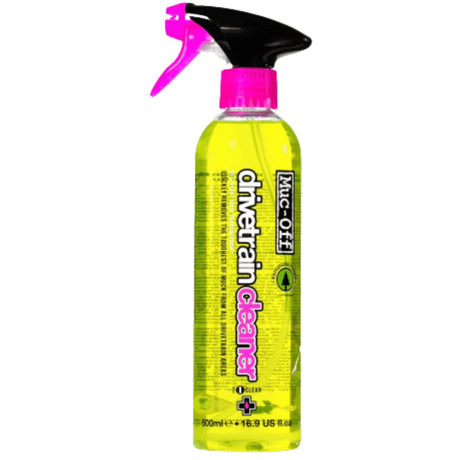
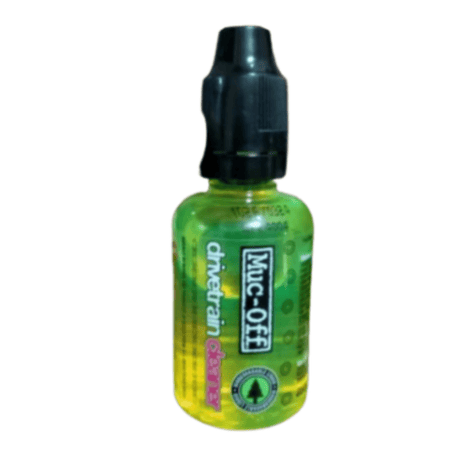
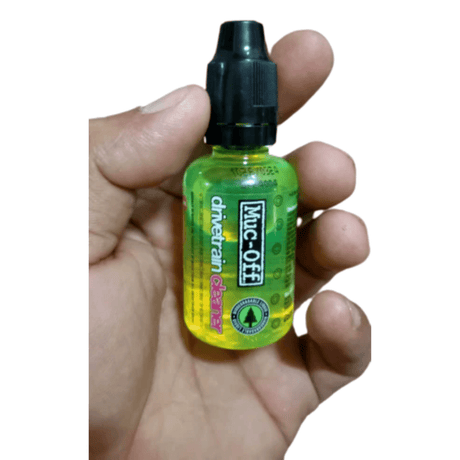
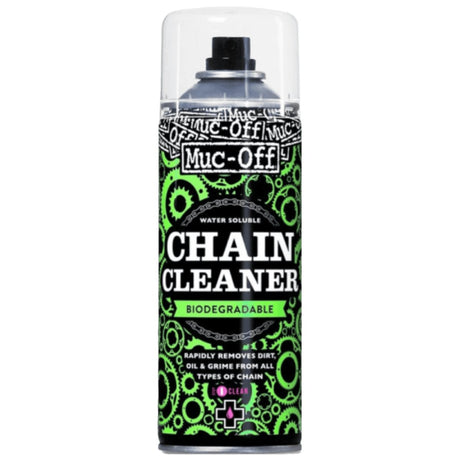
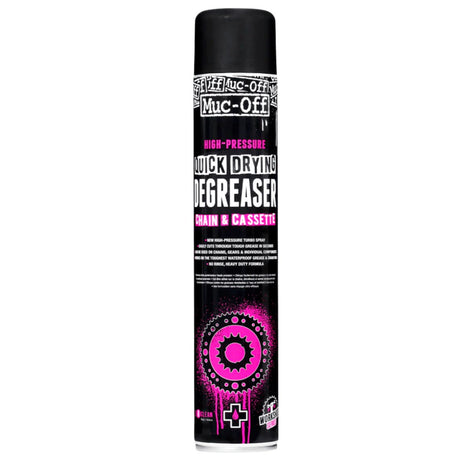
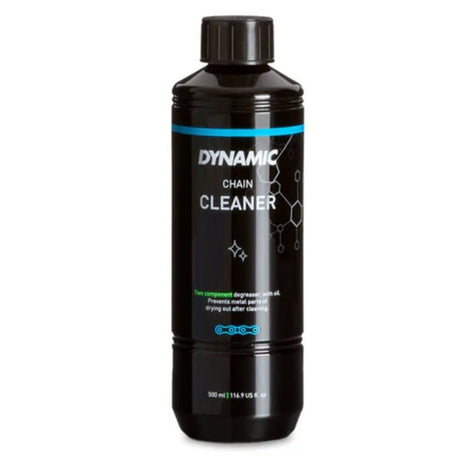
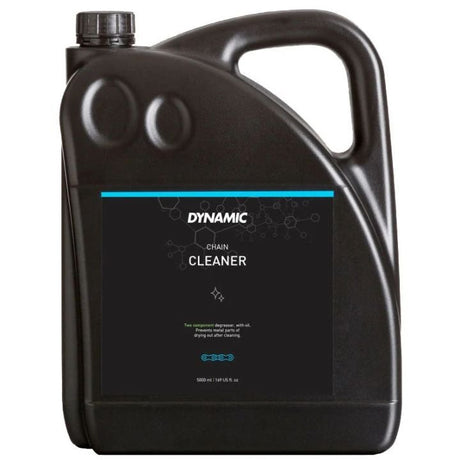
- A degreaser or chain cleaner. Muc-Off Bio Chain Cleaner for regular use, or Juice Lubes Dirt Juice Hero for a heavily neglected drivetrain.
- Brushes. A two-prong brush reaches both sides of the chain at once, and a cone brush gets between cassette sprockets.
- Rags. Old cotton, several of them. This is not the place to economise.
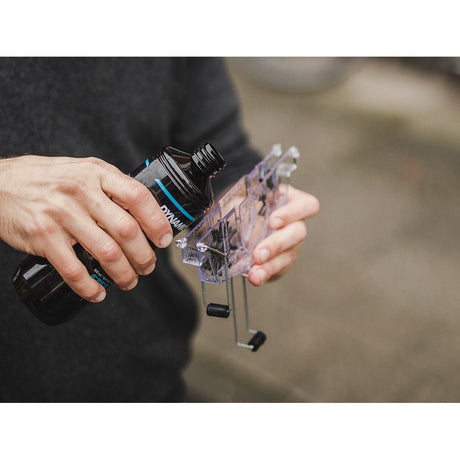
- Optional: a chain scrubber. An enclosed scrubber unit clips over the chain and does in two minutes what a brush takes ten to do, with far less mess.
The full range sits in lubricants, cleaners and degreasers and brushes.
Dry, wet or wax: choosing a lube
Most riders buy one bottle and use it all year. That is the single easiest thing to improve, because the two main types behave in opposite ways and India gives you both conditions in the same year.
| Dry lube | Wet lube | Wax | |
|---|---|---|---|
| Best for | Dry, dusty months | Monsoon, wet roads | Clean running, low friction |
| Attracts dirt | Little | Readily | Least of all |
| Survives rain | Washes off quickly | Stays put | Moderate |
| Reapply | Often | Less often | Often |
| Setup effort | None | None | Chain must be stripped bare first |
Dry lube for the dry months. Pedros Go and Muc-Off Dry both apply wet and set to a dry film that dust struggles to cling to. It needs applying more frequently, and it disappears in the first serious downpour.
Wet lube for the monsoon. Muc-Off Wet and Pedros Syn stay on the chain through rain and road spray. The cost is that they hold onto dirt, so a wet lube drivetrain needs cleaning more often even though it needs lubricating less often.
A mixed conditions lube is a reasonable compromise if you would rather own one bottle.
Wax runs cleanest of all and measurably reduces friction, but it only works properly on a chain stripped completely bare of factory grease first. It suits riders who enjoy the routine. It is not the low-effort option.
The ten minute clean
This is the version you should be doing regularly. The bike does not need to be upside down or in a stand, though a stand makes it easier.
- Shift to the largest chainring and the smallest sprocket. This straightens the chain and gives you access.
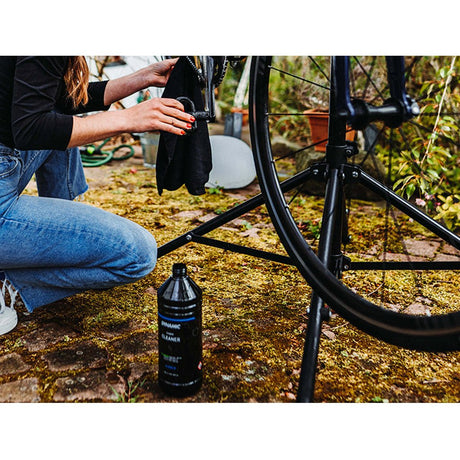
- Wipe the chain dry first. Hold a rag around it and backpedal several full rotations. You will be surprised how much comes off before any liquid is involved.
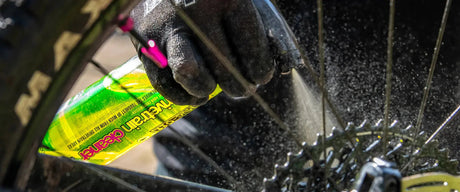
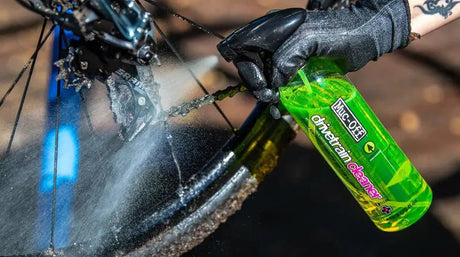
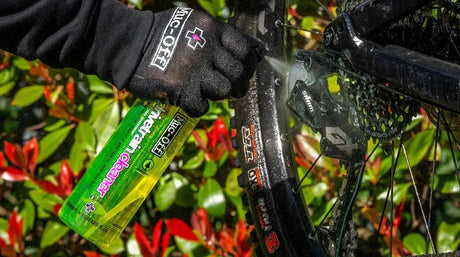
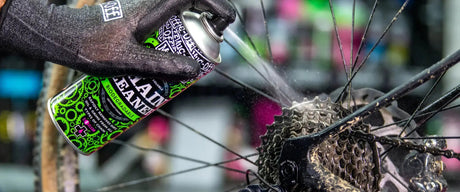
- Apply chain cleaner and work it in with a brush, backpedalling as you go, top and bottom of the chain.
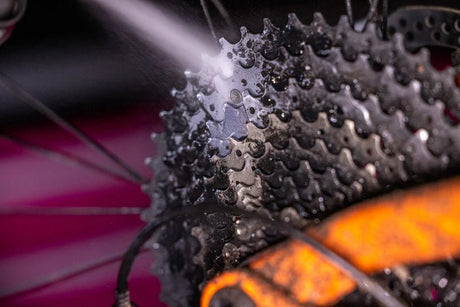
- Brush the cassette and chainrings. A cone brush between the sprockets, a stiffer brush on the chainring teeth and the derailleur jockey wheels, which collect more filth than anything else on the bike.
- Rinse with a gentle flow of water, never a pressure washer.
- Dry the chain thoroughly. Rag and backpedal until the rag comes away clean and dry. Lubricant applied over water does not work.
- Apply lube. See below, because this step goes wrong more than any other.
The deep clean
Worth doing every few months, or whenever the drivetrain has been badly neglected.
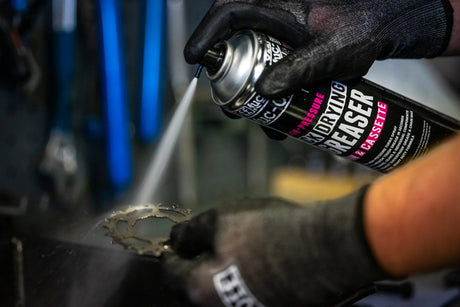
The difference is that you use a proper degreaser and an enclosed chain scrubber, and you clean the cassette thoroughly rather than superficially. Fill the scrubber with degreaser, clip it around the chain, and backpedal thirty or forty rotations. Empty, refill and repeat until what comes out is no longer black.
Then rinse everything, dry completely, and lubricate. On a badly neglected chain, expect to repeat the degreasing step more than once. If the chain still looks black after two rounds, check whether it is actually worn out rather than merely dirty. Our guide to telling when a chain is worn covers measurement.
Keep degreaser away from the disc rotors and brake pads. Contamination is the most common cause of squealing brakes and it usually means replacing the pads. Cover the rotor with a rag, or remove the wheel before you start. Our guide to brake pad compatibility covers what to do if it happens.
Applying lube, the part everyone gets wrong
Lubricant belongs inside the rollers, where metal moves against metal. Everything on the outside of the chain does nothing except collect dust. That single idea explains the whole technique.
- Hold the bottle nozzle against the chain at the lower run, just ahead of the rear derailleur.
- Backpedal slowly and apply one drop per roller, following the chain around a full rotation. Find the quick link or a marked plate so you know where you started.
- Backpedal another twenty rotations to let it work in.
- Wipe off every trace from the outside. Hold a clean rag firmly around the chain and backpedal repeatedly until the rag stays clean. This feels like you are removing the lubricant you just applied. You are not. You are removing only what was never going to help.
- Leave it to set. Dry lubes in particular need time, ideally a few hours and preferably overnight. Riding immediately after applying a dry lube flings most of it off.
A correctly lubricated chain looks almost dry and runs silently. A chain that looks wet and glistening is a chain that will be black within fifty kilometres.
Five mistakes that destroy drivetrains
- Too much lube. The most common by far. Excess on the outer plates turns road dust into an abrasive paste that wears the chain, cassette and chainrings simultaneously.
- Lubricating a dirty chain. This carries existing grit deeper into the rollers, which is precisely where you do not want it. Clean first, always.
- Pressure washing the drivetrain. A jet forces water and grit past the seals in your hubs, bottom bracket and derailleur pivots. It cleans the outside and ruins the inside.
- Degreaser on the brakes. Contaminated pads rarely recover.
- Cleaning but not drying. Lubricant cannot displace water it is applied over, and in humid conditions the rust starts underneath.
Frequently asked questions
Can I use WD-40 on my bike chain?
Not as a lubricant. Standard WD-40 is a water displacer and light solvent, so it does an excellent job of stripping old lubricant off a chain and almost no job of lubricating one afterwards. Used alone it leaves the chain effectively dry within a short ride, which accelerates wear. It is genuinely useful as a cleaning step, followed by a proper chain lubricant. The company does sell a separate bicycle-specific lubricant range, which is a different product from the familiar blue and yellow can.
Is kerosene, diesel or engine oil acceptable for a bicycle chain?
No, though all three are widely used and it is worth explaining why. Kerosene and diesel leave an oily residue that attracts dust and can degrade the seals in derailleur pulleys, and both are hazardous to handle and dispose of. Engine oil is formulated for a sealed engine, not an exposed chain, and is far too thick, so it collects grit aggressively. Bicycle chain lubricants are thin enough to penetrate the rollers and formulated to shed dust. A bottle costs a fraction of the cassette it protects.
How do I know if I have used too much lube?
Look at the chain a day after lubricating. It should look almost dry and dark grey, and your fingers should stay clean when you touch the outer plates. If it glistens, if there is a visible film on the side plates, or if a black line appears on your calf during rides, you are applying too much or not wiping enough. Another tell is dirt collecting rapidly on the derailleur jockey wheels, which act as the collection point for excess lubricant on the chain.
Do I need to remove the chain to clean it properly?
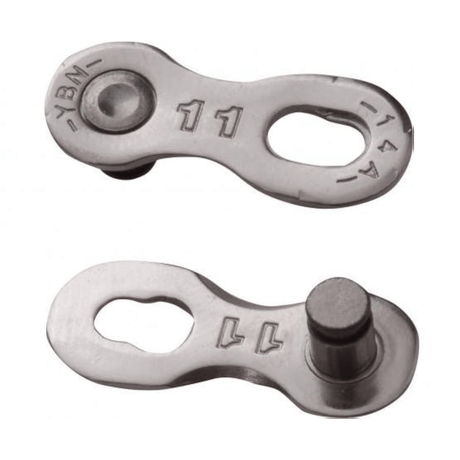
Not for routine cleaning, and there are good reasons not to. An enclosed chain scrubber cleans a fitted chain thoroughly with far less effort. Every removal and refitting of a quick link is a wear event, and at 11 and 12-speed most manufacturers specify the link as single use, so removal means a new link each time. Removal makes sense only when moving to a waxing routine, which needs the chain stripped completely bare, or when the chain is being replaced anyway.
Does chain waxing make sense in Indian conditions?
Yes, arguably more than in milder climates, because the main benefit is that wax does not attract dust and dust is the main enemy here. A waxed chain runs cleaner and quieter and needs no wiping. The commitment is real though: the chain must be stripped completely bare of factory grease before the first application, reapplication is more frequent than with wet lube, and hot melt waxing requires a dedicated slow cooker. Drip-on wax lubricants are a reasonable middle ground with much less setup.
Not sure where to start?
If your drivetrain is well past the point where a ten minute clean will help, bring the bike to our Kondapur workshop and we will strip and clean it properly, and tell you honestly whether the chain and cassette are worth saving. You can ask TBA Guide if you would like a lube recommendation for the roads you actually ride.