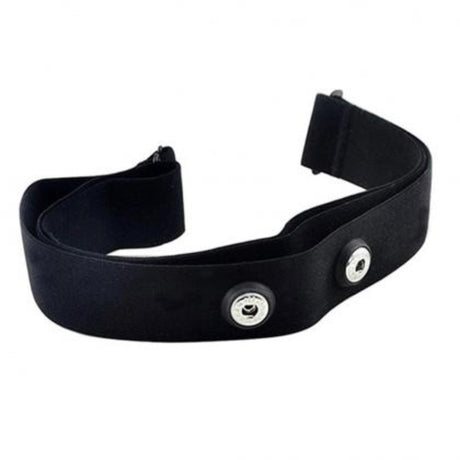
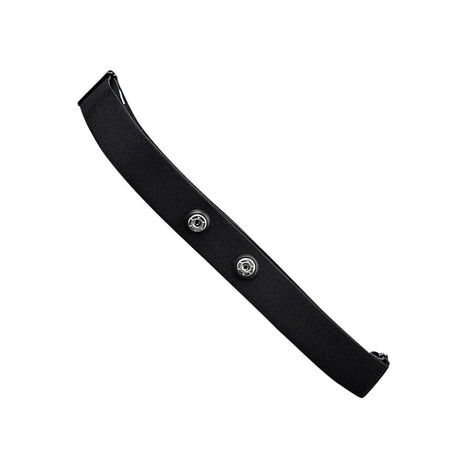
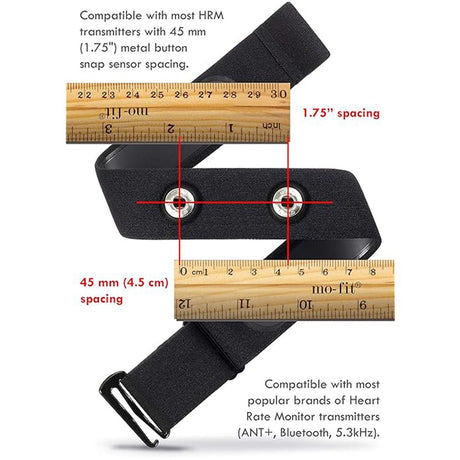
Short answer: a chest strap is the more accurate choice for training, because it reads your heart's electrical signal and responds instantly to intervals. An optical armband is more comfortable and accurate enough for steady riding, and suits riders who dislike straps. Both beat a watch's wrist sensor on the bike. For most riders, the Magene H303 chest strap at ₹3,290 is the value pick; the Magene H803 armband at ₹5,850 is the comfortable one; and the Garmin HRM 600 at ₹18,990 adds recording without a watch, swimming and running data.
Heart rate is the cheapest way to train with real numbers, and a monitor is often the first sensor riders add after a bike computer. The choice comes down to how the sensor reads your heart and where you wear it. This guide covers the difference between chest straps and armbands, why the wrist is the weakest option on a bike, what to check for connectivity and battery, and which monitor suits which rider.
- How chest straps and armbands work
- When a chest strap is the better choice
- When an armband is the better choice
- Why the wrist is the weakest option on a bike
- What to check before buying
- Our heart rate monitors compared
- Looking after a chest strap
- FAQ
- Choosing yours
How chest straps and armbands work
| Chest strap | Optical armband | |
|---|---|---|
| How it reads | Electrodes pick up the heart's electrical signal, like a simplified ECG | LEDs shine into the skin and measure changes in blood flow |
| Where you wear it | Around the chest, just below the chest muscles | Upper arm or forearm |
| Response to sudden efforts | Immediate | A short lag, typically a few seconds |
| Heart rate variability (HRV) | Yes, on supporting models | Generally not |
| Comfort | Some riders find the strap restrictive or that it chafes | Barely noticeable once fitted |
| Battery | Usually a coin cell lasting months, or rechargeable | Rechargeable, typically tens of hours per charge |
When a chest strap is the better choice
- You train with intervals. Short, hard efforts and recoveries show up immediately on a chest strap, while an optical sensor smooths them out.
- You train by heart rate zones. If heart rate is your main training number, especially without a power meter, the extra accuracy matters.
- You want HRV. Heart rate variability, used to judge recovery and readiness, needs the beat-to-beat precision of a chest strap. The Garmin HRM 200 and HRM 600 record it.
- You want the lowest price. Basic chest straps cost less than armbands, and coin-cell models need no charging.
When an armband is the better choice
- You find chest straps uncomfortable. Many riders, particularly on long rides in the heat, give up on straps because of pressure or chafing. A monitor you actually wear beats a more accurate one left in a drawer.
- You ride mostly at steady effort. For endurance rides and zone 2 work, a well-fitted armband is accurate enough.
- You do other sports too. Armbands are comfortable for gym sessions, running and hiking as well.
Fit decides an armband's accuracy. Wear it snug, on the upper arm or the thick part of the forearm, with the sensor flat against the skin and away from bone and tattoos.
Why the wrist is the weakest option on a bike
Most GPS watches have an optical sensor built in, and many riders assume that is enough. On a bike it is the least reliable of the three. Gripping the bars flexes the wrist tendons, which disturbs the reading, and road vibration shakes the sensor against the skin. Cold hands, a loose watch strap and tattoos can make it worse. The result is readings that lag, jump or lock onto your cadence instead of your heart rate. If you use a watch, pair it with a chest strap or armband for rides. Our guides to choosing a Garmin watch and the COROS Pace 4 vs Forerunner 70 cover the watches themselves.
What to check before buying
- ANT+ and Bluetooth. ANT+ connects to bike computers and many watches; Bluetooth connects to phones, Zwift and newer devices. Most monitors now do both.
- Multiple Bluetooth connections. Some monitors connect to two or three Bluetooth devices at once, useful when Zwift on a laptop and a watch both want your heart rate. The Magene H613 and COROS monitor support three.
- Battery type. Coin-cell straps run for months and the battery is cheap to replace. Rechargeable monitors avoid that, but need charging before long rides.
- Strap size. Chest straps come in sizes. Garmin's come in XS-S and M-XL, and the Magene H613 strap covers 75cm to 100cm.
- Extras. HRV, recording without a watch, swimming and running form data are worth paying for only if you will use them.
Our heart rate monitors compared

| Monitor | Type | Price | Worth knowing |
|---|---|---|---|
| Magene H303 | Chest strap | ₹3,290 | ANT+ and Bluetooth at the same time, IP67, and up to about 1,000 hours on a battery. The value pick. |
| Magene H603 | Chest strap | ₹3,990 | Magene's updated chest sensor, in a choice of colours. |
| Magene H613 | Chest strap | ₹5,590 | Connects to three Bluetooth devices at once, with heart rate alerts and LED zone lights. |
| iGPSport HR70 | Armband | ₹5,400 | Light at 13.3g, ANT+ and Bluetooth, about 65 hours per charge. |
| Magene H803 | Armband | ₹5,850 | Adjustable optical armband for riders who want to avoid a chest strap. |
| COROS Heart Rate Monitor | Armband | From ₹9,990 | Multi-channel optical sensor, about 38 hours per charge, connects to three devices at once. |
| Wahoo Tickr FIT | Armband | ₹10,600 | Up to 30 hours per charge, two band sizes, works with Apple Watch and over 50 apps. |
| Garmin HRM 200 | Chest strap | ₹11,990 | Heart rate and HRV, a coin cell lasting up to a year, and a machine-washable strap. |
| Garmin HRM 600 | Chest strap | ₹18,990 | Rechargeable, records without a watch, works in the pool, and adds running dynamics with a compatible Garmin watch. |
Prices are indicative and move with exchange rates and import duty. Browse all heart rate monitors.
A rough way to choose:
- Most riders on a budget: the Magene H303.
- Training with Zwift and a watch at the same time: the Magene H613 or the COROS armband, for their three Bluetooth connections.
- Riders who will not wear a chest strap: the Magene H803 or the COROS armband.
- Garmin users who want HRV: the HRM 200.
- Triathletes and runners in the Garmin system: the HRM 600.
Looking after a chest strap
Most chest strap problems come from the strap, not the sensor. Sweat leaves salt in the fabric and on the electrodes, and over time it causes drop-outs and spiky readings.
- Rinse the strap after every ride, with the sensor removed, and let it dry flat.
- Wash it properly every few weeks following the maker's instructions. Garmin's HRM 200 strap is machine washable once the module is off.
- Moisten the electrodes before you start. A dry strap can read high or erratically for the first few minutes.
- Replace the strap when it stretches or readings become unreliable, often after a year or so of regular use. Replacement straps for the Magene H303 cost ₹1,250, a fraction of a new monitor.
FAQ
Why does my chest strap show very high readings at the start of a ride?
Usually because the electrodes are dry or the strap is slightly loose, so the sensor picks up static from clothing, especially synthetic jerseys in dry air, and shows spikes of 180 or 200 beats per minute in the first few minutes. Moisten the electrodes with water before putting the strap on, tighten it so it does not move, and rinse salt out of the strap after every ride. If spikes continue, replace the strap or the battery.
Can I use one heart rate monitor with Zwift and my bike computer at the same time?
Yes, if the monitor supports ANT+ and Bluetooth together or several Bluetooth connections, because Zwift on a phone or laptop usually connects over Bluetooth while a bike computer can use ANT+, so a dual-band monitor can feed both at once. Monitors with three Bluetooth channels, like the Magene H613 and the COROS armband, can connect to a watch, a phone and a trainer app together. Older Bluetooth-only straps connect to one device at a time.
Do heart rate monitors work for swimming?
Only models designed for it, because optical armbands and most chest straps either lose contact in the water or cannot send a live signal through it, since Bluetooth and ANT+ do not travel well underwater, so most monitors simply show nothing during a swim. The Garmin HRM 600 stores heart rate during a swim and sends it to a compatible Garmin watch afterwards, and it is rated to 5 ATM. For triathletes who want heart rate on all three legs, that storing feature is what matters.
Is an armband accurate enough for heart rate zone training?
For steady endurance and tempo riding, a well-fitted optical armband is usually accurate enough for zone training, because heart rate changes slowly during long, even efforts and the small lag of an optical sensor makes little difference to which zone you are in. It is less reliable for short intervals, sprints and sudden changes in effort. Wear it snug on the upper arm or forearm, and check it against a chest strap if readings ever look wrong.
How long does a heart rate monitor last?
The sensor itself typically lasts many years, but the strap is the part that wears out, usually after a year or two of regular use, as sweat, washing and stretching gradually reduce how well it grips your chest and how cleanly the electrodes pick up the signal. Coin-cell batteries last months and are cheap to replace, while rechargeable batteries slowly lose capacity over several years. Replacing the strap alone is the most common fix when readings become unreliable, and costs far less than a new monitor.
Choosing yours
The right monitor depends on how you train, what it needs to connect to, and whether you can live with a chest strap. If you are starting to train by numbers, our guide to your first FTP test covers the next step. Or ask TBA Guide with your watch, bike computer and the apps you use, and we will suggest the monitor that fits.