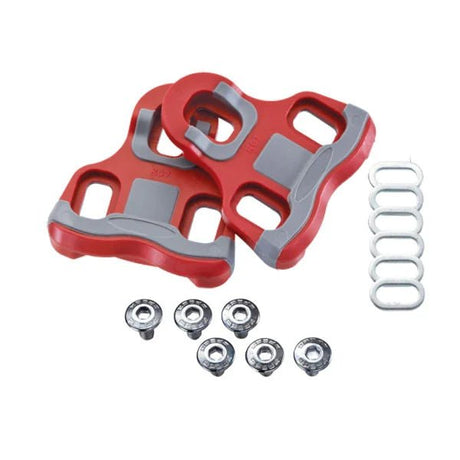
Short answer: the cleat system decides whether you want road or mountain bike shoes, not the other way round. Three-bolt road cleats give the most efficient connection and are hard to walk in. Two-bolt SPD cleats sit inside a treaded sole, so you can walk into a café or a shop, and for commuting, touring and most gravel riding they are the better choice. Then get the size right, which matters more than the brand, and budget for pedals and cleats as well as the shoes.
Cycling shoes are one of the upgrades riders feel most, and one of the easiest to get wrong, because a shoe is only one part of a system. It has to match a cleat, the cleat has to match a pedal, and all three have to suit how you actually ride. This guide works through that system in the order the decisions should be made.
- Shoes, cleats and pedals are one decision
- Road or MTB: the cleat decides
- The three cleat systems
- Getting the size right
- Shoes for Indian heat
- Soles and closures
- Which shoe for which rider
- The pedals and cleats you will also need
- FAQ
- Narrowing it down
Shoes, cleats and pedals are one decision
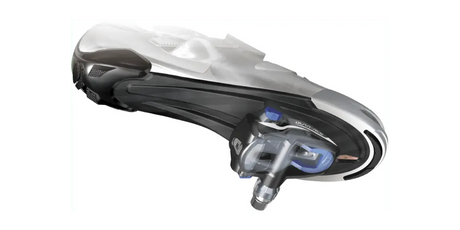
Clipless shoes do not clip into anything on their own. A cleat bolts to the sole, and the cleat locks into a matching pedal. Get any one of the three wrong and the other two are useless.
So the right order is: decide how you ride, which tells you the cleat system; the cleat system tells you which pedals and which shoe soles work; then choose the shoe that fits your foot. Most expensive mistakes come from doing it the other way round, buying a good-looking shoe first and discovering it does not suit the pedals or the riding.
Road or MTB: the cleat decides

Road shoes use a large three-bolt cleat that sticks out below a smooth, stiff sole. The big cleat spreads the load across the pedal and gives a very solid connection, which is why road riders use it. The cost is walking: you clump about on the cleat, it is slippery on tile and marble, and every step wears the cleat down.
Mountain bike and gravel shoes use a small two-bolt SPD cleat set into a recess in a treaded sole. You can walk almost normally, and the cleat barely touches the ground. The connection is a touch less broad than a road cleat, which almost nobody notices outside racing.
The honest advice for a lot of Indian riding: if you stop at chai points, commute, tour or ride gravel, two-bolt SPD is the better system even on a road bike. Road cleats earn their place for riders who clip in at home, ride hard, and clip out at home again.
The three cleat systems
| System | Bolts | Walkable? | Cleats we stock |
|---|---|---|---|
| Shimano SPD-SL | 3-bolt road | Poorly | Shimano SPD-SL ₹1,310 · Wellgo RC-9B ₹1,095 · Xpedo Sonic 9 ₹1,650 |
| Look Keo | 3-bolt road | Poorly | Look Grip ₹2,070 · Wellgo RC-7A ₹890 · Xpedo Thrust 7 ₹1,650 |
| Shimano SPD | 2-bolt | Well | Wellgo 98A ₹890 · Xpedo XPT ₹1,950 · MKS US-S ₹1,340 |
The compatibility point that saves people money: a three-bolt road shoe takes both SPD-SL and Keo cleats, because they share the same bolt pattern. So the shoe does not lock you into a pedal brand, the cleat does. What does not work is mixing across systems: an SPD-SL cleat will not clip into a Keo pedal, and a Keo cleat will not clip into an SPD-SL one.
The one other thing to understand is float, the few degrees your heel can swing before the cleat releases. A little float lets your knee track naturally and is kinder to joints. Zero-float cleats hold your foot rigidly and are for riders whose position has been properly set. Shimano colour-codes its SPD-SL cleats by float, and the yellow version with about six degrees is the sensible default for most people. The Xpedo Sonic 9 comes in 0 and 4 degree versions, and the Xpedo Thrust 7 in 0 and 6.
Getting the size right

Size matters more than brand, stiffness or closure. A shoe that is a size out will cost you more comfort than any carbon sole gives back.
Do not order by your street shoe size. Cycling shoes use EU sizing that varies between brands, some come in half sizes, and a few use UK sizing instead. Sidi offers half sizes such as 40.5 and 41.5, and Mavic lists sizes in UK numbers, so a 42 from one brand and a 42 from another can be meaningfully different.
Measure properly instead:
- Measure in the evening or after a ride, when your feet are at their largest. Feet swell on a long hot ride, and a shoe that fits perfectly at 7am can pinch by 10am.
- Stand on a sheet of paper and mark heel and longest toe, then measure in millimetres and compare against the brand's own chart.
- The fit you want is snug at the heel with no lift as you pedal, secure across the instep, and a few millimetres of room at the toes. Cycling shoes stretch very little, so do not buy tight expecting them to give.
- If your feet are wide, look for a wide last rather than going up a size. The Sidi Alba 2 Mega is Sidi's wider fit, and going up a size to gain width only leaves your heel lifting.
Use the brand's own chart: the FLR road and triathlon and FLR MTB and gravel charts, and the Sidi, Northwave, Mavic and Giro charts.
Shoes for Indian heat
Most shoe advice is written for climates where the problem is cold feet. Here it is the opposite, and it changes what to look for.
- Ventilation matters more than weight. Look for mesh panels and perforations across the toe and the top of the foot. Hot feet swell, and swollen feet make a well-fitting shoe feel tight.
- Colour is not only cosmetic. A white or light upper stays noticeably cooler in direct sun than a black one. The FLR FNT-5 comes in white, and the FLR FNT-9 Knit in Pure White.
- Knit uppers breathe. A knitted upper like the FNT-9's lets air through across its whole surface rather than only through vents, which makes a real difference on a long morning ride.
- Socks are part of it. A thin synthetic cycling sock wicks sweat and cuts friction. Thick cotton socks hold moisture and turn a comfortable shoe into a hot one.
Soles and closures
Sole stiffness is what transfers your effort to the pedal. Carbon soles are the stiffest and lightest, and they cost more. Nylon and composite soles flex slightly more and are entirely adequate for most riding below racing. Brands publish their own stiffness numbers, but they are not comparable from one brand to another, so do not shop on them.
Closures come in three kinds. Velcro straps are simple and cheap. Laces give an even fit and look classic but cannot be adjusted while riding. Dials, such as the Boa system on the Bont Riot Road+, let you tighten or loosen on the move, which is useful as your feet swell through a hot ride.
Dials do occasionally break, and it is worth knowing replacement parts exist. Northwave sells its SLW X-Dial kit at ₹1,595 and replacement knobs at ₹1,250, which is far cheaper than a new pair of shoes.
Which shoe for which rider

| If you | Look at | Price |
|---|---|---|
| Commute, tour or ride gravel and want to walk | FLR FX-3 MTB and Gravel | ₹9,990 |
| Walk a lot off the bike, or ride an e-bike | FLR MXT Vibram Touring | ₹10,990 |
| Want your first pair of road shoes | FLR FNT-3 | ₹10,690 |
| Want the road sweet spot | FLR FNT-5 | ₹14,199 |
| Ride long, hot mornings | FLR FNT-9 Knit | ₹16,799 |
| Need a half size | Sidi Fast | ₹16,999 |
| Have wide feet | Sidi Alba 2 Mega | From ₹15,499 |
| Want a dial you can adjust on the move | Bont Riot Road+ Boa | ₹17,500 |
| Ride seriously and want a long-lasting road shoe | Sidi Ergo 5 | From ₹23,999 |
| Want the best, and race | Mavic Cosmic Ultimate III | ₹30,900 |
| Want a women's specific MTB shoe | Northwave Escape Evo or Corsair | From ₹9,850 |
If you want one answer: the FLR FNT-5 at ₹14,199 for road riders, and the FLR FX-3 at ₹9,990 for everyone who walks as well as rides. The FNT-5 also runs down to size 37, which is useful if you have smaller feet and find most road shoes start too large.
Several of the premium shoes are available in only one or two sizes, so check your size before you settle on a model.
The pedals and cleats you will also need
Budget for the whole system, not just the shoes. Most clipless pedals come with a pair of cleats, but check the listing before assuming.
| System | Pedals | Price |
|---|---|---|
| SPD-SL road | Shimano Tiagra PD-R550 | ₹7,420 |
| Look Keo road | Look Keo 2 Max Carbon | ₹10,320 |
| SPD two-bolt | Look X-Track | ₹4,999 |
| SPD two-bolt, budget | Wellgo M-279DU | ₹4,175 |
| SPD one side, flat the other | Wellgo C-317B | ₹4,125 |
That last one is worth a special mention for commuters. It has an SPD mechanism on one side and a flat platform on the other, so you can clip in for a proper ride and still ride to the shop in ordinary shoes.
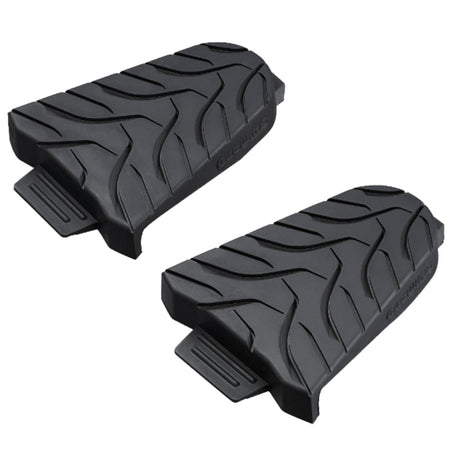
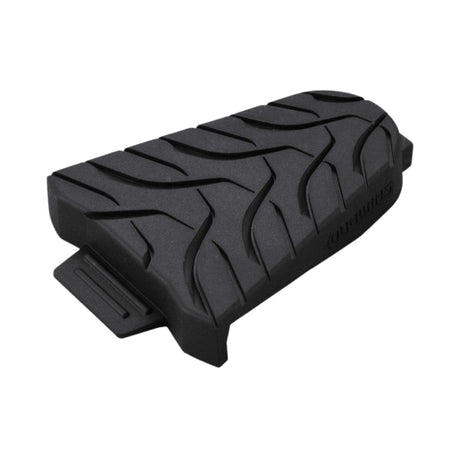
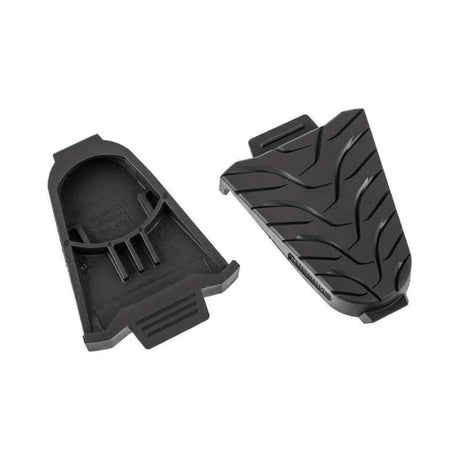
If you ride on road cleats, a pair of Shimano SPD-SL cleat covers at ₹1,480 protects them when you walk, and stops you sliding on a café floor.
Prices are indicative and move with exchange rates and import duty.
FAQ
Can I use road cycling shoes with SPD pedals?
Usually not: most road shoes are drilled only for three-bolt road cleats such as Shimano SPD-SL and Look Keo, while SPD pedals need a two-bolt cleat, so the two do not fit together. A minority of road shoes are drilled for both patterns, and the sole will show a pair of slots if yours is one of them. If you want SPD pedals, the simplest answer is a mountain bike or gravel shoe, which is also far easier to walk in.
How often should I replace my cleats?
Replace them when the release starts to feel vague, the cleat rocks on the pedal, or you begin unclipping by accident, rather than on a fixed schedule. Road cleats wear fastest because every step you walk grinds the plastic down, so a rider who stops at chai points may need new ones within a season, while one who rarely walks can go much longer. Metal SPD cleats last considerably longer than plastic road ones. Check them monthly and look at the front edge, which wears first.
Do I need cycling shoes for a spin bike or smart trainer?
You do not strictly need them, but they make indoor riding noticeably better, because you can pull through the whole pedal stroke rather than only pushing down. Most gym spin bikes use SPD two-bolt pedals, often with a cage on the other side for ordinary shoes, so a mountain bike shoe is the more useful choice. On a smart trainer you ride your own bike, so use whatever pedals and cleats you already run outdoors.
How tight should cycling shoes feel?
Snug but not painful: your heel should not lift as you pedal, the shoe should hold firmly across the top of your foot, and your toes should have a few millimetres of room to move. Cycling shoes stretch very little, so a shoe that pinches in the shop will still pinch in a month. Remember that feet swell on hot rides, which is why a fastening you can loosen on the move, such as a dial, is useful in this climate.
What are heel wedges, and do I need them?
Heel wedges are thin angled shims fitted under the cleat or inside the shoe to tilt the foot slightly, and they are used when a bike fitter finds that your foot naturally rolls in or out as you pedal, pushing the knee off a straight line. Most riders do not need them. If you get knee pain on the inside or outside of the joint on longer rides, it is worth a fit before adding anything, rather than guessing, because a wedge fitted the wrong way can make things worse.
Narrowing it down
Not sure which cleat system suits how you ride, or which size you are in a particular brand? Ask TBA Guide with your foot length, the pedals on your bike and the kind of riding you do, and we will narrow it to one or two pairs.