The question usually arrives as some version of "I want something with navigation that works with my phone and my watch". It is a reasonable ask and the answer is less obvious than it should be, because bike computers and GPS watches overlap heavily, cost similar money, and are genuinely better at different things. This guide covers what actually matters, what each does well, and what to buy first.
Contents
- Computer, watch, or both
- What actually matters
- Bike computers by budget
- GPS watches by budget
- Sensors, and what to add first
- The mount matters more than you think
- Heat, monsoon and Indian map data
- Frequently asked questions
Computer, watch, or both
| Bike computer | GPS watch | |
|---|---|---|
| Screen size | Large, readable at speed | Small |
| Navigation | Genuinely usable maps | Workable, cramped |
| Battery on a long ride | 15 to 40 hours | Shorter with GPS active |
| Off the bike | Nothing | Running, swimming, sleep, daily wear |
| Best for | Cycling, especially long or navigated rides | Multi-sport athletes, triathletes |
If you only ride, buy a computer. The screen is the whole argument: glancing at a handlebar-mounted display at 30 kmph is safe, while lifting a wrist to read a map is not.
If you also run or swim, buy a watch. Triathletes and runners get far more from one device that covers everything, and a watch on the bars in a quarter-turn mount is a workable compromise.
Plenty of people eventually own both, with the watch handling daily wear and running and the computer handling rides. That is a sensible end state rather than a redundancy.
What actually matters
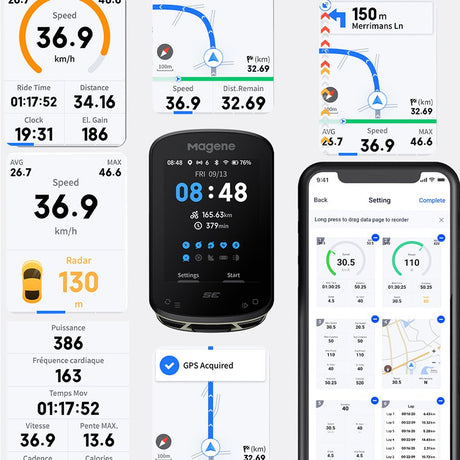
- Navigation type. There is a real difference between a breadcrumb line showing your route as a squiggle and full map navigation with street names and turn prompts. If you ride unfamiliar routes, pay for real maps.
- Battery life. Check the figure with GPS and the backlight active, not the headline number. For brevets and long days, twenty hours is a sensible minimum.
- Screen readability in direct sun. More important in India than almost anywhere. Transflective screens read better in harsh light than bright colour displays.
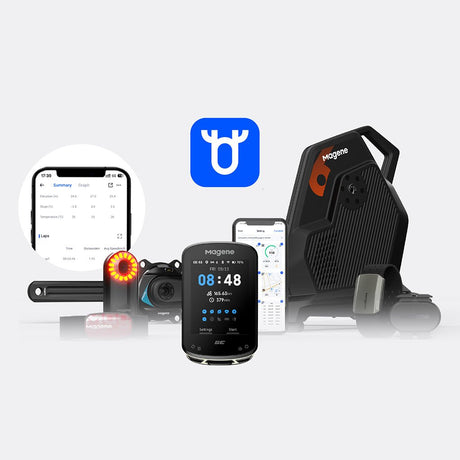
- Sensor connectivity. ANT+ and Bluetooth. Both is better, since ANT+ connects to multiple devices at once and Bluetooth to your phone.
- Where your data goes. All of these sync to Strava. Check the app suits you, because you will use it more than the device.
Bike computers by budget
| Model | Price | Suits |
|---|---|---|
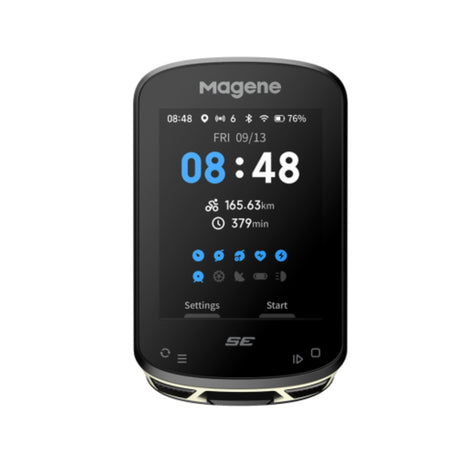
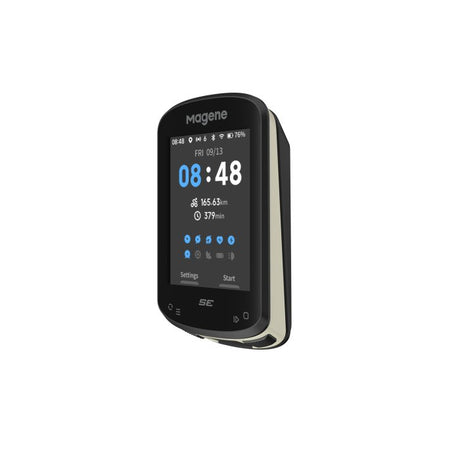
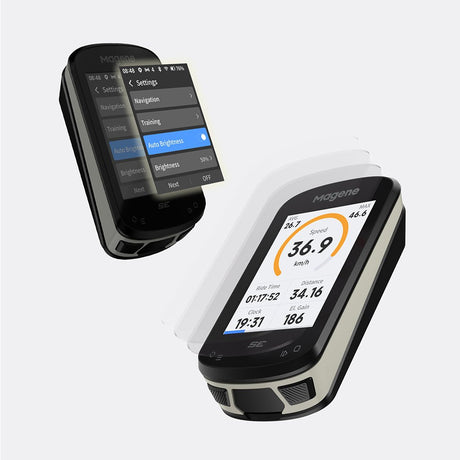
| Magene C506 | ₹12,900 | First computer, sensors, no complex navigation |
| Magene C606 Pro | ₹20,900 | Colour screen and navigation at a sensible price |
| Magene C706 | ₹25,900 | Larger screen, longer rides |
| Garmin Edge 540 | ₹31,990 | Full mapping, the widest ecosystem |
The honest summary of that ladder: Magene delivers most of the function for considerably less money, and Garmin's advantage is the maturity of its maps, its app and the sheer breadth of things that connect to it. If you ride unfamiliar routes often and want navigation you never have to think about, that premium is real. If you mostly ride known roads and want data, it is not.
The full range is in cyclo-computers, including iGPSport, which sits between the two on price.
GPS watches by budget
| Model | Price | Suits |
|---|---|---|
| Garmin Forerunner 70 | ₹32,990 | Running and cycling, everyday wear |
| Garmin Instinct E | ₹36,990 | Rugged build, long battery |
| Garmin Forerunner 570 | ₹67,990 | Serious triathlon training |
| Garmin Forerunner 965 | ₹74,299 | Mapping on the wrist, full training metrics |
| Garmin Fenix 8 Solar | ₹1,35,990 | Ultra distance, expedition battery |
Coros is worth considering alongside these, particularly for battery life relative to price. The full selection is in smart watches.
Sensors, and what to add first
A computer without sensors shows you speed and distance, which your phone already does. The sensors are where the value is, and they are cheap relative to the head unit.
- Speed and cadence, first. Cadence is the single most useful number for a developing rider, because it tells you whether you are grinding a gear that is too big. A dual-mode sensor at ₹2,590 is the best value purchase in this entire article. Speed sensors also keep recording distance accurately when GPS drops under tree cover or between tall buildings.
- Heart rate, second. A chest strap such as the Magene H303 or the Garmin HRM 200 is meaningfully more accurate than a wrist sensor, especially during hard efforts when wrist optical readings lag.
- Power, much later. A power meter is the most precise training tool available and the most expensive. Buy one when you are following a structured plan and the numbers will change what you do. Options start with the Magene PES-P515.
The mount matters more than you think
An out-front mount holds the unit ahead of the bars, level with your line of sight and readable without moving your head. A stem mount sits lower and requires you to look down, which takes your eyes further from the road.
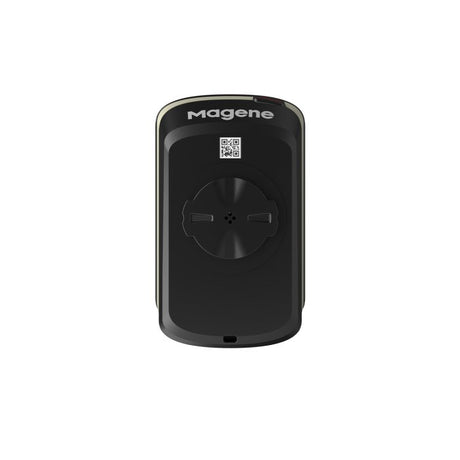
For a few hundred rupees this is the cheapest safety improvement available. An out-front mount at ₹850 or a stem mount at ₹390 both beat propping a phone somewhere. If you have an integrated cockpit, check you need a specific mount for it, because a standard bar clamp will not fit an aero bar.
Heat, monsoon and Indian map data
Three things worth knowing before you buy.
- Map coverage in India is patchier than in Europe. Turn-by-turn navigation works well on main roads and in cities, and becomes unreliable on rural and unpaved routes where roads are unmapped or wrongly classified. Plan routes in advance on Strava, Komoot or RideWithGPS and load them, rather than asking the device to route you live. Always carry a phone.
- Heat affects the battery, not usually the device. Quoted battery figures come from temperate testing, so expect less in a 38 degree summer, particularly with the backlight up in bright sun. Do not leave the unit clamped to a bike parked in the sun all afternoon. The same reasoning as our bike light battery guide applies.
- Monsoon is fine, the charging port is not. These devices are built to be rained on. What damages them is charging while the port is still wet. Dry it thoroughly first.
Frequently asked questions
Do I need a bike computer if I already record rides on my phone?
Not strictly, but there are four practical reasons riders switch. Battery, since GPS recording drains a phone quickly and leaves you without a phone at the end of a long ride. Screen visibility, because phone screens wash out in direct Indian sunlight. Safety, since a bar-mounted unit is glanceable while a phone is not. And sensors, because most phones cannot connect to ANT+ cadence, heart rate or power. If you ride under an hour on known roads, your phone is genuinely fine.
Will a bike computer work with an Apple Watch?
Not as a paired device, and this is worth being clear about. An Apple Watch will not act as a heart rate sensor for a Garmin, Magene or Coros head unit, because it does not broadcast over ANT+ and its Bluetooth is not open for that purpose. What does work is at the data level: the Garmin Connect and Coros apps can write completed activities into Apple Health, and everything syncs to Strava, so your training history stays in one place. If you want heart rate on your bike computer, buy a chest strap.
Is turn-by-turn navigation reliable enough in India to rely on?
On main roads and in cities, yes. On rural routes, treat it as a guide rather than an instruction. Underlying map data classifies many Indian roads inaccurately, so a device routing you live can send you down a track that is unpaved, gated or does not exist. The reliable method is to plan the route in advance, load it to the device and follow the line, which works well because you have already checked it on satellite imagery. Carry a phone with mobile data as a backup.
Which sensor should I buy first, heart rate or cadence?
Cadence, for most riders, and it costs less. Cadence tells you something you can act on immediately: whether you are turning the pedals fast enough or grinding a gear that is too big, which is the most common inefficiency in developing riders and a frequent cause of knee pain. Heart rate is more useful once you are training to zones and following a plan. If your budget covers a dual speed and cadence sensor, that is the natural first purchase.
Do I need a power meter?
Only if you are following a structured training plan that prescribes power targets, or preparing for a specific event where pacing matters. Power is the most precise measure of effort available, unaffected by heat, fatigue or caffeine in the way heart rate is, which makes it excellent for pacing a long climb or a time trial. For a rider who trains by feel and rides for enjoyment, the money is far better spent on wheels, tyres or a bike fit.
Tell us how you ride
The right answer depends on whether you also run, how long your rides are, and whether you navigate unfamiliar routes. Tell those three things to ask TBA Guide and we will point you at one device rather than a category. You can see most of these working at our Kondapur store.