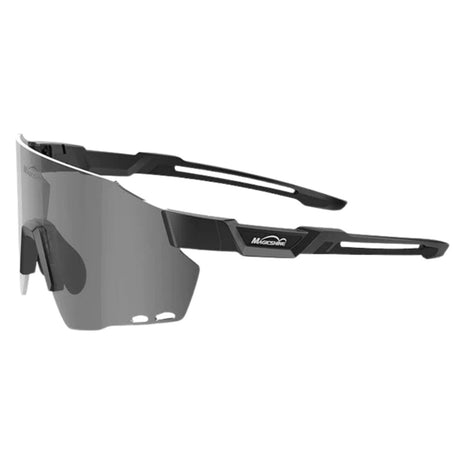
Short answer: choose wraparound cycling sunglasses with full UV400 protection, a lens that suits the light you ride in, and a frame that stays put without pressing on your temples or touching your helmet. For riders in India who start before sunrise and finish in hard sun, a photochromic lens is the most practical single pair. Good cycling sunglasses start at around ₹3,000, and the extra money buys better optics, lighter frames and more lens choice rather than more protection.
Cycling sunglasses are not just sunglasses you wear on the bike. At 25 km/h, wind dries your eyes, dust and insects hit your face, and a stone flicked up by a truck can do real damage. The right pair also has to work in the riding position, where you look out from under your helmet. This guide covers what sunglasses do for a cyclist, how to choose a lens, how a good pair should fit, the options if you wear glasses, and which pairs to buy at each budget.
- Why cyclists wear sunglasses
- Choosing a lens
- Photochromic, polarised or interchangeable?
- How cycling sunglasses should fit
- If you wear glasses
- What to buy at each budget
- Looking after them
- FAQ
- Getting help
Why cyclists wear sunglasses
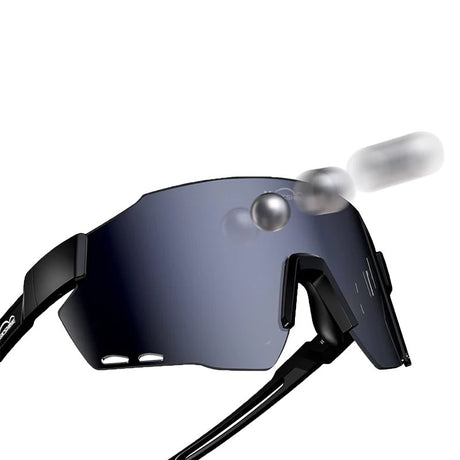
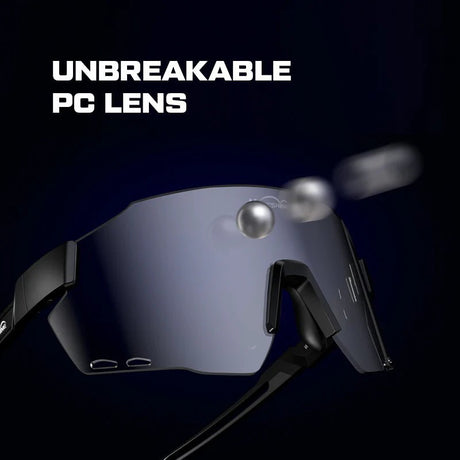
- Protection from debris. Grit, insects and gravel thrown up by other vehicles are the main reason. Cycling lenses are made of impact-resistant polycarbonate, which is far safer than glass if something hits them.
- Wind and dust. A wraparound lens stops your eyes drying and watering, which matters on long rides and fast descents.
- UV. Hours outdoors add up. Look for UV400, which blocks UVA and UVB. Every pair we stock offers this.
- Glare and fatigue. Squinting into the sun for three hours is tiring. A good tint lets you relax your face and see the road surface clearly.
Choosing a lens
Lenses are graded by how much light they let through, known as visible light transmission (VLT). The lower the VLT, the darker the lens.
| Category | Light let through | Best for |
|---|---|---|
| 0, clear | 80 to 100% | Night, dawn and dusk. Protection without any tint. |
| 1, light tint | 43 to 80% | Overcast days, forest trails and early mornings. |
| 2, medium tint | 18 to 43% | Mixed sun and cloud, and monsoon riding. |
| 3, dark tint | 8 to 18% | Bright sun. The standard choice for most Indian riding during the day. |
| 4, very dark | 3 to 8% | Extreme glare, such as high altitude. Too dark for shade and tunnels. |
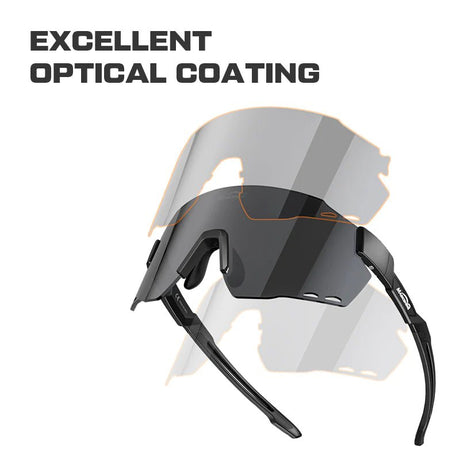
Lens colour changes contrast as well as brightness. Smoke or grey keeps colours natural and is the safest all-day choice. Brown and rose tints add contrast and make potholes and road texture stand out. Yellow and light orange brighten low light. Mirror coatings are mostly a look, but they also reflect some extra glare.
Photochromic, polarised or interchangeable?
- Photochromic lenses darken in sunlight and clear in low light, so one pair covers a ride that starts in the dark and ends in midday sun. This makes them the best single pair for most riders in India. They take a minute or so to change, so riding from bright sun into a shaded road can leave you briefly in a lens that is too dark. They also darken a little less in high heat, which is normal.
- Polarised lenses cut glare reflected off flat surfaces, such as wet roads and water. They are excellent for coastal and monsoon riding. The downside is that some bike computer and phone screens can look dark or patchy through them, depending on the angle.
- Interchangeable lenses come with two or more lenses you swap by hand, usually a dark one and a clear or low-light one. They give you the best lens for each condition, but you have to carry the spare and change it yourself.
- Single fixed lenses are the simplest and cheapest. A dark grey or brown lens is right for most daytime rides. Pair it with a cheap clear pair for night rides.
How cycling sunglasses should fit
Try sunglasses on with your helmet, and check them in your riding position, not standing upright.
- Look up from the drops or hoods. The top of the frame should not cut across your view of the road ahead. Taller lenses and frameless shields give the clearest view in a low position.
- Clear of the helmet. The arms should sit comfortably under or over the helmet's retention cradle without being pushed down, and the frame should not touch the helmet's front edge.
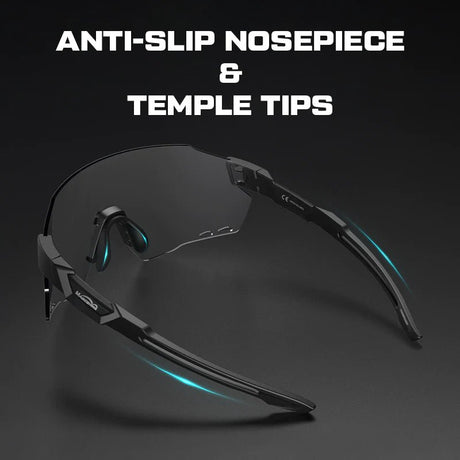
- Snug, not tight. They should not slip when you shake your head or look down, but should not press on your temples or behind your ears. Rubber nose pads and arm tips help them grip when you sweat.
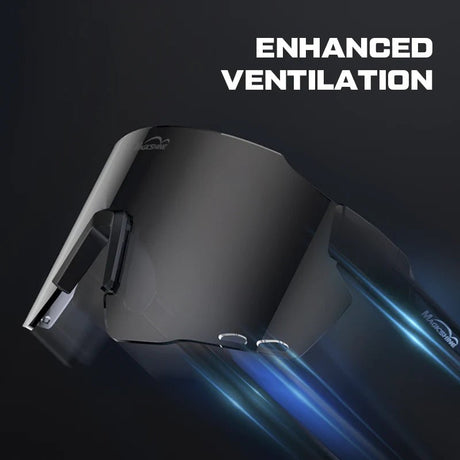
- Clear of your face. Lenses should not touch your eyelashes or cheeks. A small gap at the bottom lets air through and reduces fogging.
- Coverage. Wraparound lenses block wind and debris from the sides. Casual-style frames look better off the bike but leave gaps.
- Face size. Narrow faces suit compact frames. Larger faces may suit an XL version, such as the Tifosi Swank XL.
Our helmet fit guide explains how to adjust the retention cradle so your helmet and sunglasses work together.
If you wear glasses
- Prescription inserts. Some cycling sunglasses accept a small clip-in frame behind the lens, which an optician fits with your prescription. The Magicshine Windbreaker Myopic Glass Support at ₹750 does this for the Magicshine Windbreaker.
- Contact lenses with ordinary cycling sunglasses give the widest field of view, and wraparound lenses help stop them drying out in the wind.
- Prescription sports lenses made by an optician for a wraparound frame are the most comfortable long-term option, though the most expensive.
- Glasses under a large shield work for short rides but often fog and press on your nose.
What to buy at each budget

| Budget | Pick | Lens | Why |
|---|---|---|---|
| About ₹3,000 | Tifosi Swank, from ₹2,990 | Single | Casual-style frame that works on and off the bike, for commuting and easy rides. |
| About ₹3,750 | Magicshine Windbreaker Classic, ₹3,750 | Single | A full wraparound cycling lens with an adjustable nosepiece and a prescription insert option. |
| About ₹4,000 | Tifosi Vogel SL, ₹3,990, or Magicshine Rouler Classic, ₹3,990 | Single | A large shield lens for maximum coverage in the riding position. |
| About ₹4,500 to ₹5,000 | Magicshine Windbreaker Photochromic, ₹4,990, or Magicshine Sprinter Photochromic, ₹4,590 | Photochromic | One pair from pre-dawn starts to midday sun. Our pick for most riders. |
| About ₹5,200 to ₹6,200 | Bliz Drift Polarized, ₹5,200, or Tifosi Swick Polarized, ₹6,190 | Polarised | Cuts glare off wet roads and water, for coastal and monsoon riding. |
| About ₹9,000 | Tifosi Rail Race, ₹8,990 | Interchangeable | Two lenses, a red mirror lens for sun and a clear lens for low light, with adjustable arms and nose pads. |
| About ₹15,000 | 100% S2, ₹14,900 | Shield | A rimless shield with a very wide field of view, inspired by the Speedcraft raced in the pro peloton. |
Prices are indicative and move with exchange rates and import duty. See all cycling sunglasses.
Looking after them
- Rinse before you wipe. Dust and dried sweat scratch lenses when rubbed dry. Rinse with clean water, then dry with a microfibre cloth.
- Use the pouch. Most lens damage happens in a jersey pocket or bag, not on the bike.
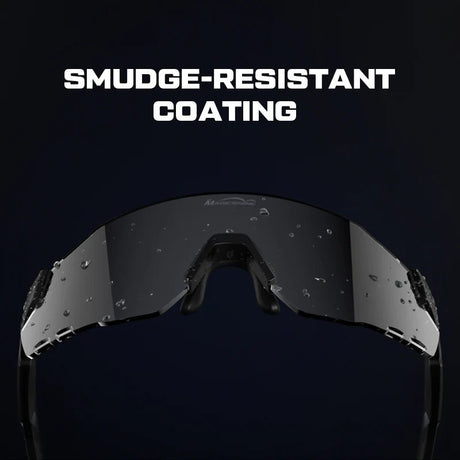
- Avoid harsh cleaners. Household glass cleaner and alcohol can strip lens coatings.
- Keep them out of a hot car. Long spells on a dashboard can warp frames and damage coatings.
- Replace scratched lenses. A badly scratched lens scatters light and causes eye strain, and on many models a replacement lens costs far less than a new pair.
For more on riding comfortably in hot weather, see our summer cycling guide.
FAQ
What lens colour is best for cycling in India?
For daytime riding in bright Indian sun, a dark smoke, grey or brown lens in category 3 is the best general choice, because grey keeps colours natural while brown adds contrast that makes potholes and road texture easier to see, and both are dark enough to stop you squinting for hours. For dawn starts, a photochromic or clear lens works better. Keep yellow tints for low light only.
Are photochromic sunglasses good for cycling?
Yes, photochromic lenses suit cycling very well, because a ride that starts before sunrise and finishes in midday sun passes through every light level, and a lens that clears in the dark and darkens in sunlight means one pair covers the whole ride without stopping to change lenses or carrying a spare. They take a minute or so to adjust. They also darken slightly less in very hot weather.
Should cycling sunglasses be polarised?
Polarised lenses are worth having if you often ride along water, on wet roads in the monsoon or in strong glare, because they cut reflected light from flat surfaces, but they are not essential, and some riders dislike that certain bike computer and phone screens look dark or patchy through them at some angles. For most road riding, a good tinted lens is enough. Check your computer screen through them before buying.
Why do my cycling glasses fog up?
Cycling glasses fog when warm, moist air from your face and sweat meets a cooler lens with too little airflow, which happens most when you stop at a junction, climb slowly or ride in humid weather, and is worse when the lenses sit too close to your face or your helmet pad holds sweat. Vented lenses and a small gap help. Lift them onto your helmet when stopped.
Do expensive cycling sunglasses protect your eyes better?
Not in terms of UV, because a Rs 3,000 pair with genuine UV400 lenses blocks harmful rays as effectively as a Rs 15,000 pair, so the extra money goes on optical clarity, lens contrast technology, lighter and more comfortable frames, better coatings that resist scratches and fogging, and wider lens choice rather than on basic protection. Impact resistance matters too. Buy cycling-specific polycarbonate lenses from a known brand.
Getting help
Not sure which lens or frame suits your face and the riding you do? Ask TBA Guide and we will help you choose.