Short answer: decide first whether you need GPS at all. If you only want speed, distance and time, a ₹1,590 Cateye does that job for years. If you want your rides on Strava without draining your phone, the cheapest sensible GPS units start around ₹5,100. Above that you are paying for battery life, sunlight readability and turn-by-turn navigation, in that order of usefulness. Magene is the value answer in India right now, Garmin the premium one, and iGPSport covers every price in between.
- Do you actually need GPS?
- What actually matters, and what does not
- The brands, and what each is good at
- What to buy at each budget
- FAQs
- Narrowing it down
Do you actually need GPS?
This is the question that saves most people the most money, and almost nobody asks it.
A GPS head unit records where you went, uploads to Strava, and on the dearer models navigates. A basic computer uses a magnet and a wheel sensor to tell you speed, distance, ride time and an odometer. That is all most riders look at while riding.

Buy a basic computer if you ride to stay fit, you look at speed and distance, and you are not chasing segments. The Cateye Velo 9 at ₹1,590 is wired and will outlive several phones. The Velo Wireless+ at ₹3,590 loses the cable. The Padrone Digital at ₹8,290 has a large screen and pairs with speed, cadence and heart rate sensors, which covers a surprising amount of what people buy GPS units for.
Buy GPS if you want rides on Strava automatically, you ride unfamiliar roads, or you are training to numbers. Everything below assumes you have decided you do.
What actually matters, and what does not
Battery life, which matters more here than anywhere
Claimed figures are measured in mild conditions with the backlight off. Ride in 38 degrees with the screen bright and expect meaningfully less. For a rider doing three-hour weekend rides, anything above 15 real hours is fine. If you do 200km brevets, look for 25 hours or more and carry a cable anyway.
Sunlight readability, which matters more than resolution
Indian daylight is brutal on screens. A crisp colour display that washes out at 11am is worse than a plain monochrome one you can read at a glance. If you are choosing between two units at the same price, take the one you can read without shading it with your hand.
Navigation, the real price divider
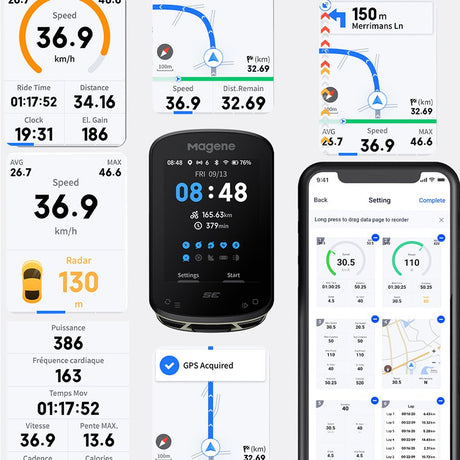
There are two very different things sold as navigation. Breadcrumb draws a line of your route with no map underneath, which is enough if you know the area roughly. Full turn-by-turn has routable maps on the device and will reroute when you miss a turn. That second feature is most of what separates a ₹15,000 unit from a ₹35,000 one. If you ride the same four routes around the city, you do not need it.
Sensor support, which is simpler than it looks
Two wireless standards exist. ANT+ broadcasts to several devices at once, so one heart rate strap can feed your head unit and a gym treadmill together. Bluetooth generally pairs one to one. Almost every sensor sold now does both, and almost every GPS unit here reads both, so this is rarely the deciding factor. It matters if you already own older ANT+ only sensors.
What does not matter
Touchscreens are pleasant in a shop and awkward in rain with gloves. Colour maps look good in photographs. Structured workout features sit unused on most people's devices. None of these is a reason to spend another ₹10,000.
The brands, and what each is good at
Magene: the value answer

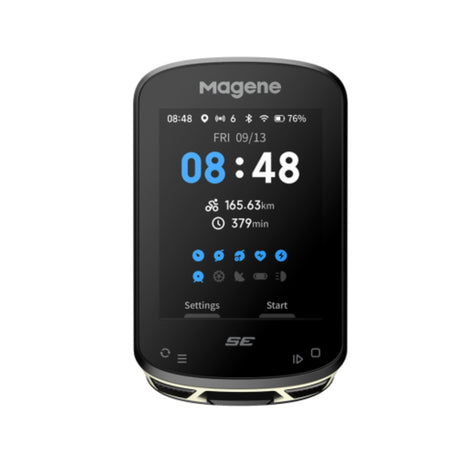
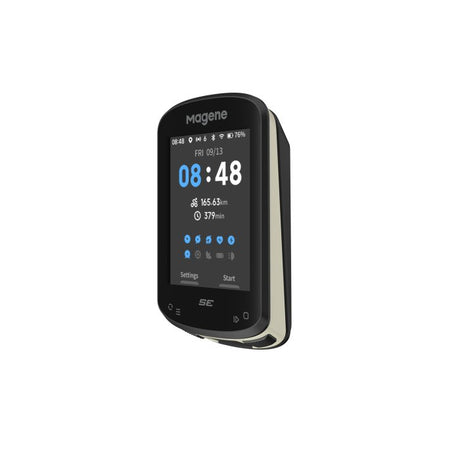
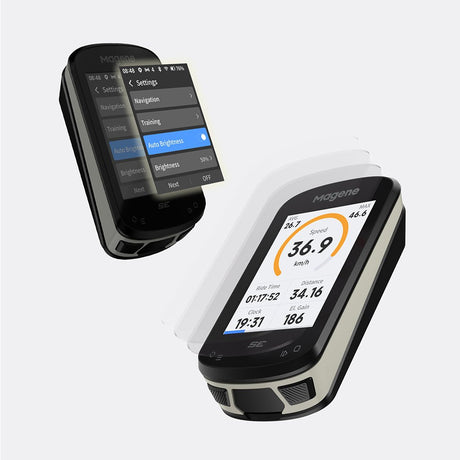
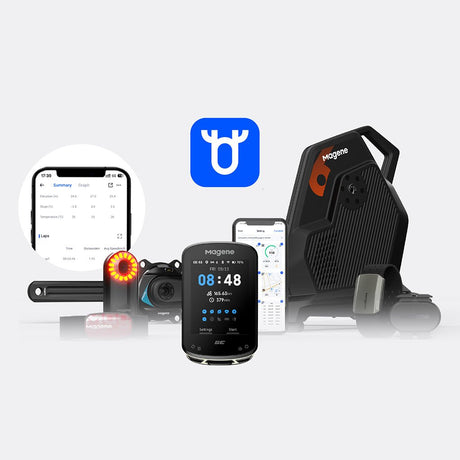
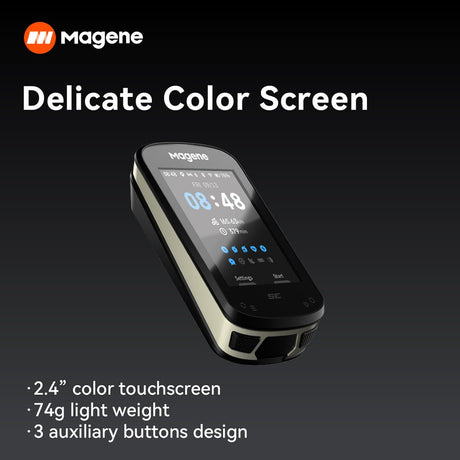
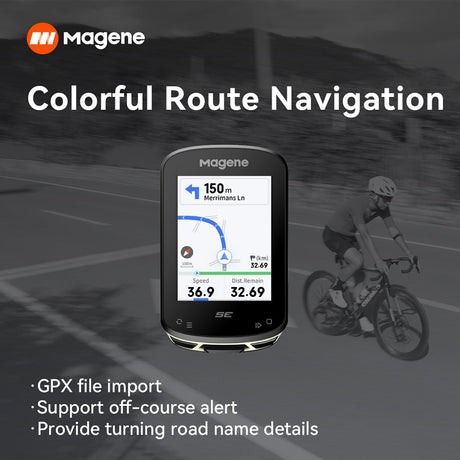
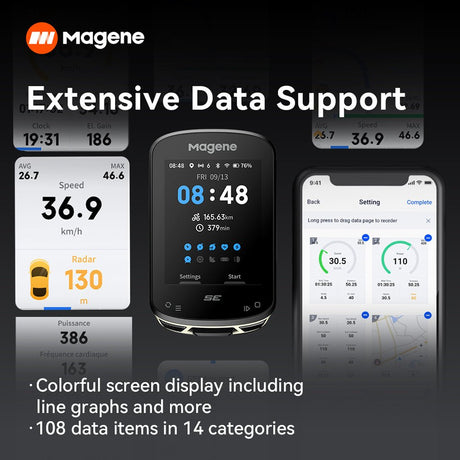
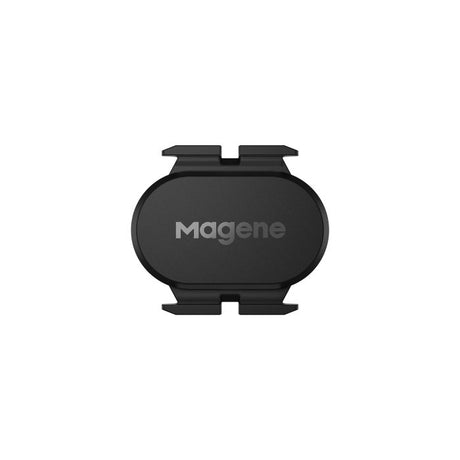
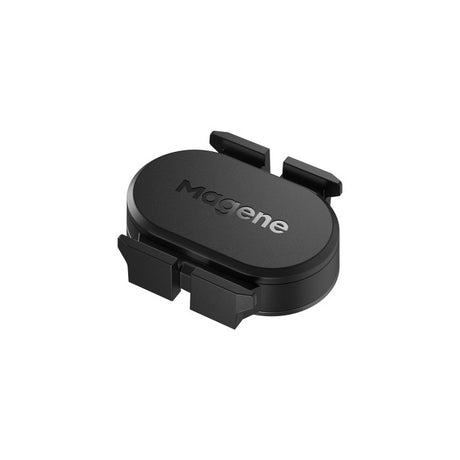
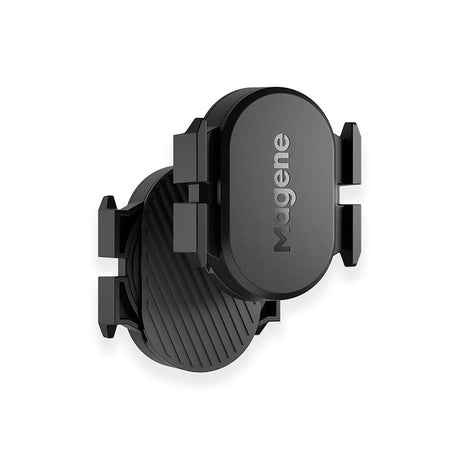
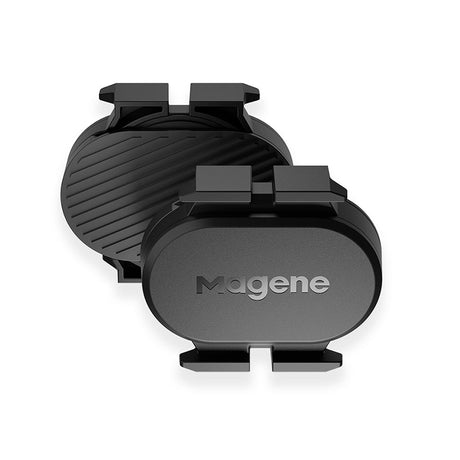
Magene is the deepest range we can supply by a wide margin, around 370 units across five models, and the pricing is the reason people end up here. The C506SE at ₹8,500 and the C506 at ₹12,900 cover the entry GPS bracket. The C606 V2 at ₹16,900 and C606 Pro at ₹20,900 step up screen and features, and the C706 at ₹25,900 is the top of the range.
The C706 is also the one we most often have at the store rather than on order, which is worth knowing if you want to handle one before buying.
Garmin: the premium standard

Garmin is the default for a reason: the ecosystem is mature, Garmin Connect is good, and almost every sensor and trainer on the market is tested against it. The catch in India is price.
The Edge 540 is the one to look at, at ₹31,990 reduced from ₹39,490, and it is the only Garmin here with real depth behind it. The Edge 550 at ₹54,990 and Edge 850 at ₹69,990 sit above it in small numbers. The Edge 1040 and all the sensor bundles are currently unavailable.
iGPSport: fills every gap

iGPSport has the widest spread of price points of any brand here, from the BSC100Max at ₹5,100, which is the cheapest GPS unit we sell, up through the BSC200S at ₹9,099, the BSC300T at ₹14,500 and the iGS630S at ₹18,999, to the BiNavi Air at ₹21,999 and iGS800 at ₹36,000.
The trade is depth. Most iGPSport models are one to a few units at a time, so if a specific one suits you, say so early rather than deciding over a fortnight.
Wahoo: excellent, and currently almost unavailable
Wahoo units are genuinely good, with the cleanest phone setup of any brand and buttons rather than a touchscreen, which many riders prefer. Being straight with you though: we can currently source two Wahoo units in total, a single Elemnt Bolt 3 at ₹36,999 and a single Elemnt Ace at ₹69,999. The Roam 3, Roam V2 and Bolt V2 are all out of stock.
If you have your heart set on Wahoo, talk to us about timing before you plan around it.
What to buy at each budget
| Budget | Pick | Why |
|---|---|---|
| Under ₹2,000 | Cateye Velo 9, ₹1,590 | Speed, distance, time. Wired, nearly indestructible |
| Around ₹5,000 | iGPSport BSC100Max, ₹5,100 | The cheapest way onto Strava without your phone |
| Around ₹8,500 | Magene C506SE, ₹8,500 | Proper GPS with sensor support |
| ₹12,000 to ₹17,000 | Magene C506 or C606 V2 | The sweet spot for most riders |
| Around ₹26,000 | Magene C706, ₹25,900 | Top of the value range, often at the store |
| Around ₹32,000 | Garmin Edge 540, ₹31,990 | Reduced from ₹39,490. The ecosystem pick |
| Above ₹55,000 | Garmin Edge 550 or 850 | Only if you genuinely navigate unfamiliar roads |
If you want one recommendation: spend between ₹12,000 and ₹17,000. That is where GPS accuracy, a readable screen, sensor pairing and a battery that lasts a long weekend ride all arrive together, and below it you will be replacing the unit within two years.
Prices are indicative and move with exchange rates and import duty.
FAQs
Will my existing Garmin mount fit a Magene or an iGPSport?
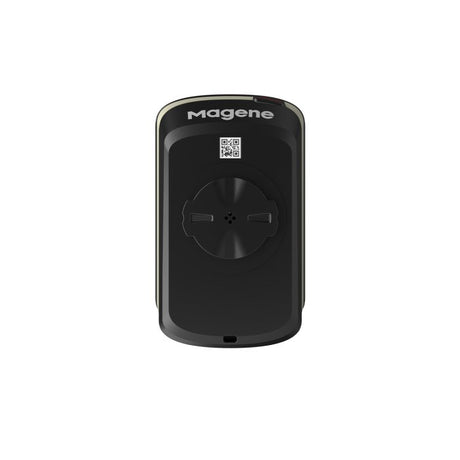
Almost certainly yes. The quarter-turn mount Garmin introduced has become the de facto standard, and Magene, iGPSport and Wahoo units all use a compatible fitting. That means out-front mounts, stem mounts and aero bar mounts carry over when you change brands, and you can leave a cheap mount permanently on a second bike. Check the shape before you buy an expensive aero mount, because a handful of integrated cockpit mounts are brand specific.
Is a bike computer worth it if I already run Strava on my phone?
For a short commute, no. For anything over about two hours, yes, and for four reasons. Your phone battery does not survive a long ride with the screen and GPS running, a phone on the bars is fragile and hard to read in sun, you cannot pair heart rate and cadence sensors as reliably, and you are not fishing a phone out of a jersey pocket in traffic to check anything. The cheapest units here cost less than a phone screen repair.
Can I use one computer across two bikes?
Yes, and most people eventually do. Buy a second mount, which costs very little, and leave one on each bike. Sensors are the part to think about: speed and cadence sensors live on the bike, so a second set is needed if you want data from both, while a heart rate strap lives on you and moves with you. Most units let you save separate bike profiles so the odometer for each stays correct.
ANT+ or Bluetooth, does the difference matter when I am buying?
Rarely, because almost everything sold now does both. It matters in two situations. If you own older sensors that are ANT+ only, confirm the new unit reads ANT+ before buying. And if you want one heart rate strap feeding a head unit and an indoor trainer app at the same time, ANT+ handles that cleanly while Bluetooth can be fussy about simultaneous connections. Otherwise buy on screen, battery and price and ignore the standards.
How long do these really last on a charge in Indian heat?
Expect noticeably less than the box claims, because quoted figures assume mild temperatures and a dim screen. Heat is hard on lithium batteries and a bright backlight is the single biggest drain, so a unit rated for 20 hours might give you 13 to 15 on a hot day with the screen readable. Plan around roughly two thirds of the claimed number and you will not be caught out. Charging from a power bank mid-ride works on most units if you are doing very long distances.
Narrowing it down
Still not sure? Ask TBA Guide with your budget and the kind of riding you do, and we will narrow it to two or three.