
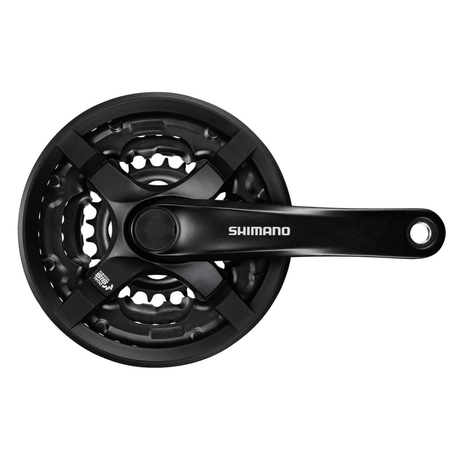
Shimano Tourney Front Chainwheel FC-TY501 3x8/7/6-speed
6-speed · 42-34T
Black · 42-34-24T, 48-38-28T
Regular price ₹1,780Unit price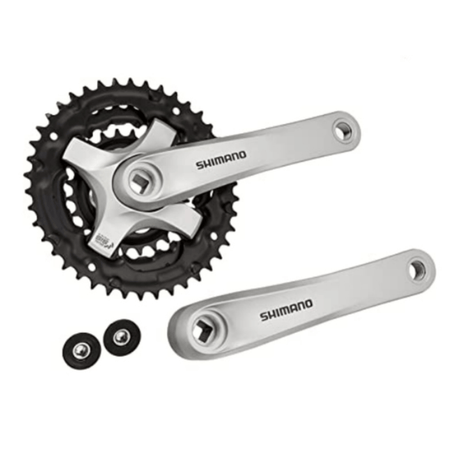
Shimano Tourney Front Chainwheel FC-TY501 3x8/7/6-speed
6-speed · 42-34T
Silver
Only size 42-34-24T
Regular price ₹1,690Unit price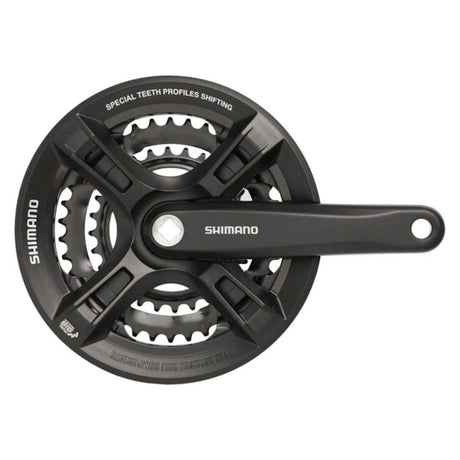
Shimano Altus FC-M311-L 7/8 speed Front Chainwheel
8-speed
42-32-22T (W/CG)
Only 2 left
Regular price ₹2,470Unit price-
Shimano Altus FC-M311-L 7/8 speed Front Chainwheel
8-speed
48-38-28T (W/CG)
Only 2 left
Regular price ₹2,470Unit price 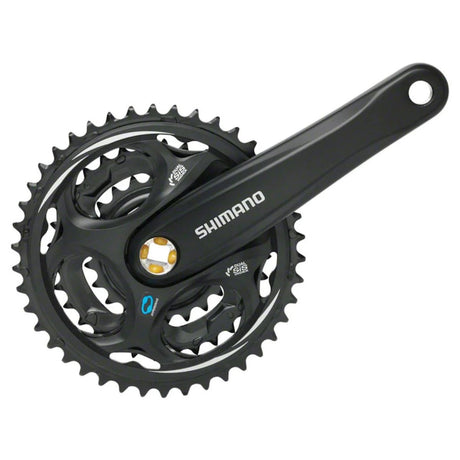
Shimano Altus FC-M311-L 7/8 speed Front Chainwheel
8-speed
48-38-28T (W/O CG)
Only 2 left
Regular price ₹2,390Unit price


Shimano 105 Hollowtech II FC-R7100 12 Speed Front Chainwheel
12-speed · 50-34T
50-34T, 52-36T
Regular price ₹14,410Unit price
Shimano Cues FC-U4000-2 2x9/10/11-Speed Front Chainwheel
11-speed · 40-26T
Only size 40-26T w/o CG
Regular price ₹1,870Unit price


Shimano Ultegra Hollowtech II FC-R8100 Front Chainwheel 2x12 Speed
12-speed · 46-36T
50-34T, 52-36T
Regular price ₹24,380Unit price

Shimano GRX FC-RX600-11 Gravel 2x11-Speed Front Chainwheel
11-speed · 46-30T
Only size 46-30T
Regular price ₹11,490Unit price

Shimano Sora FC-R3000 Front Chainwheel 2x9-Speed
9-speed · 50-34T
Only size 50-34T
Regular price ₹8,030Unit price
Shimano Claris Front Chainwheel FC-R2000 8 Speed
8-speed · 50-34T
Regular priceFrom ₹6,500Unit price
Shimano 105 Hollowtech II FC-R7000 11 Speed Front Chainwheel
11-speed · 50-34T
black
Only size 50-34T
Regular price ₹13,490Unit price
Shimano Cues Hollowtech II FC-U6040-2 9/10-Speed Front Chainwheel
10-speed · 46-32T
46-32T
Only 2 left
Regular price ₹8,630Unit price

Shimano GRX Gravel Front Chainwheel FC-RX810-2 11-speed
11-speed · 48-31T
Only size 48-31T
Regular price ₹18,970Unit price
Shimano FC-MT210-3 Crankset 9 Speed
9-speed · 44-32T
40-30-22T - W/CG
Only 2 left
Regular price ₹3,090Unit price

Shimano Ultegra Hollowtech II FC-R8000 Front Chainwheel 2x11 Speed
11-speed
50-34T
Regular price ₹24,490Unit price

Shimano Tiagra Front Chainwheel FC4700 10 Speed
10-speed · 48-34T
50-34T, 52-36T
Regular price ₹10,290Unit price

Shimano Tiagra FC-R4000 2x11 Speed Front Chainwheel
11-speed · 50-34T
Regular price ₹12,100Unit price

Shimano Acera FC-M371-L 9-Speed Front Chainwheel
9-speed · 44-32T
Only size 48X36X26T (W/CG)
Regular priceFrom ₹3,330Unit price

 Sold out
 Sold out
Shimano Cues FC-U4000-1 1x9/10/11-Speed Front Chainwheel
11-speed · 30T
Regular price ₹2,980Unit price Sold out
Shimano Tourney TY FC-TY301 3x6/7/8-Speed 150mm Front Chainwheel
8-speed · 42-34T
Regular price ₹1,640Unit price
 Sold out

 Sold out
Shimano Deore FC-M5100-1 1x10/11-Speed Front Chainwheel
11-speed · 30T
Regular price ₹4,960Unit price Sold out


Frequently Asked Questions
Which Shimano crankset do I need?
Which Shimano crankset do I need?
Choose a Shimano crankset that matches your number of speeds, your bottom bracket spindle type and the chainring sizes you want. Road bikes usually take a double with a 24 mm Hollowtech II spindle, while many entry bikes use square taper cranks. Match the crank arm length to what you ride now unless a bike fit suggests otherwise.
What is the difference between compact and standard road cranksets?
What is the difference between compact and standard road cranksets?
A compact road crankset uses 50 and 34 tooth chainrings, a mid-compact uses 52 and 36, and a standard uses 53 and 39. Smaller rings give easier gears for climbing and steady riding, while larger rings suit fast group rides and racing on flat roads. Most riders find a compact or mid-compact the most versatile choice.
Which crank length should I choose?
Which crank length should I choose?
Most riders use 170 or 172.5 mm cranks, with 165 mm suiting shorter riders and those with tight hips or knees, and 175 mm used by some taller riders. Shorter cranks can also help keep a smooth pedal stroke at high cadence. If you are unsure, keep your current length or ask a bike fitter for advice.
Can I fit a single chainring to a Shimano double crankset?
Can I fit a single chainring to a Shimano double crankset?
Sometimes, but a dedicated 1x crankset or chainring works best, because 1x rings use a tooth profile designed to hold the chain without a front derailleur. Some Shimano cranks accept a single ring on the existing spider, while others need a direct-mount ring. Pair a 1x setup with a clutch rear derailleur and a wide-range cassette.
When should I replace my chainrings?
When should I replace my chainrings?
Replace chainrings when the teeth look hooked, shark-finned or noticeably thinner, or when a new chain skips or drops under load. Chainrings usually outlast several chains if each chain is changed before it wears too far. Replacement rings must match your crank's bolt circle diameter, the ring position, inner or outer, and your number of speeds.


